




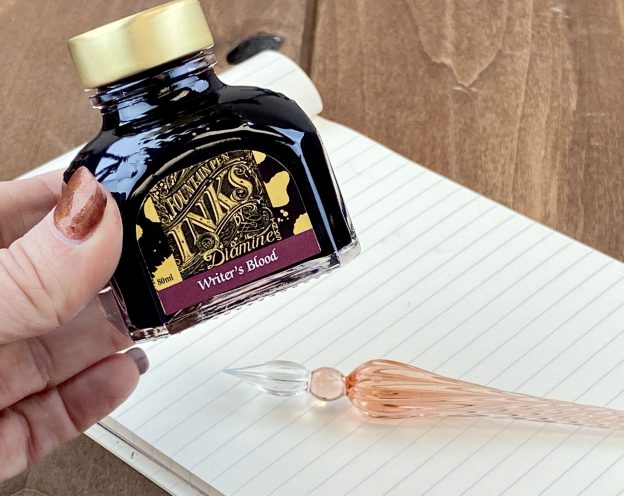
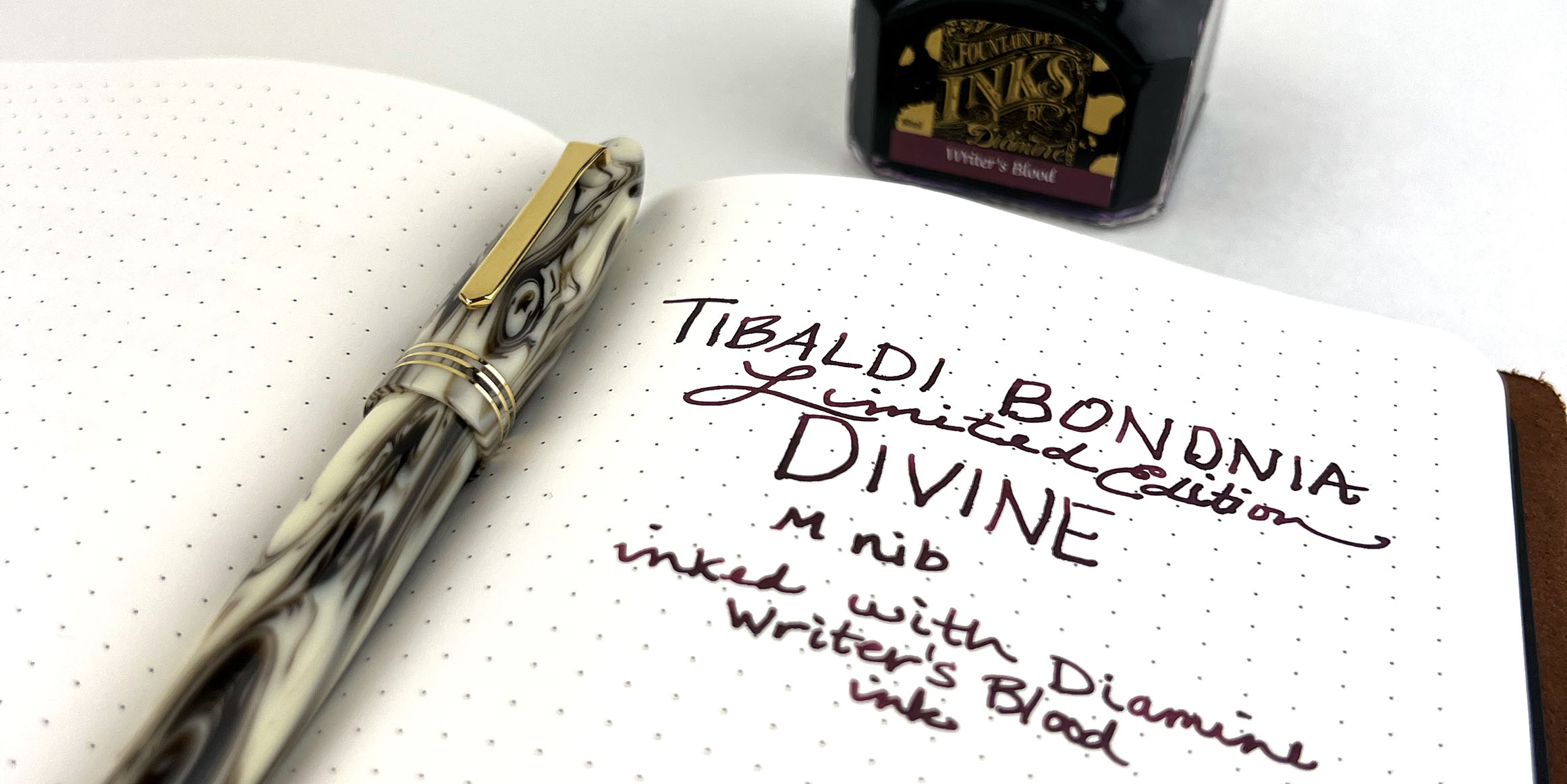
Diamine Writer’s Blood ink review time is long overdue. Diamine Writer’s Blood is one of those cult-favorite dark reds that fountain pen people (very reasonably) get a little obsessed with. It’s rich, gothic, and surprisingly practical if you like your reds on the serious side instead of candy-bright.
Our primary test setup for this Diamine Writer’s Blood ink review: a J. Herbin glass dip pen (writes similar to a medium nib) on Rhodia lined paper.
Meet the Ink Maker: Diamine
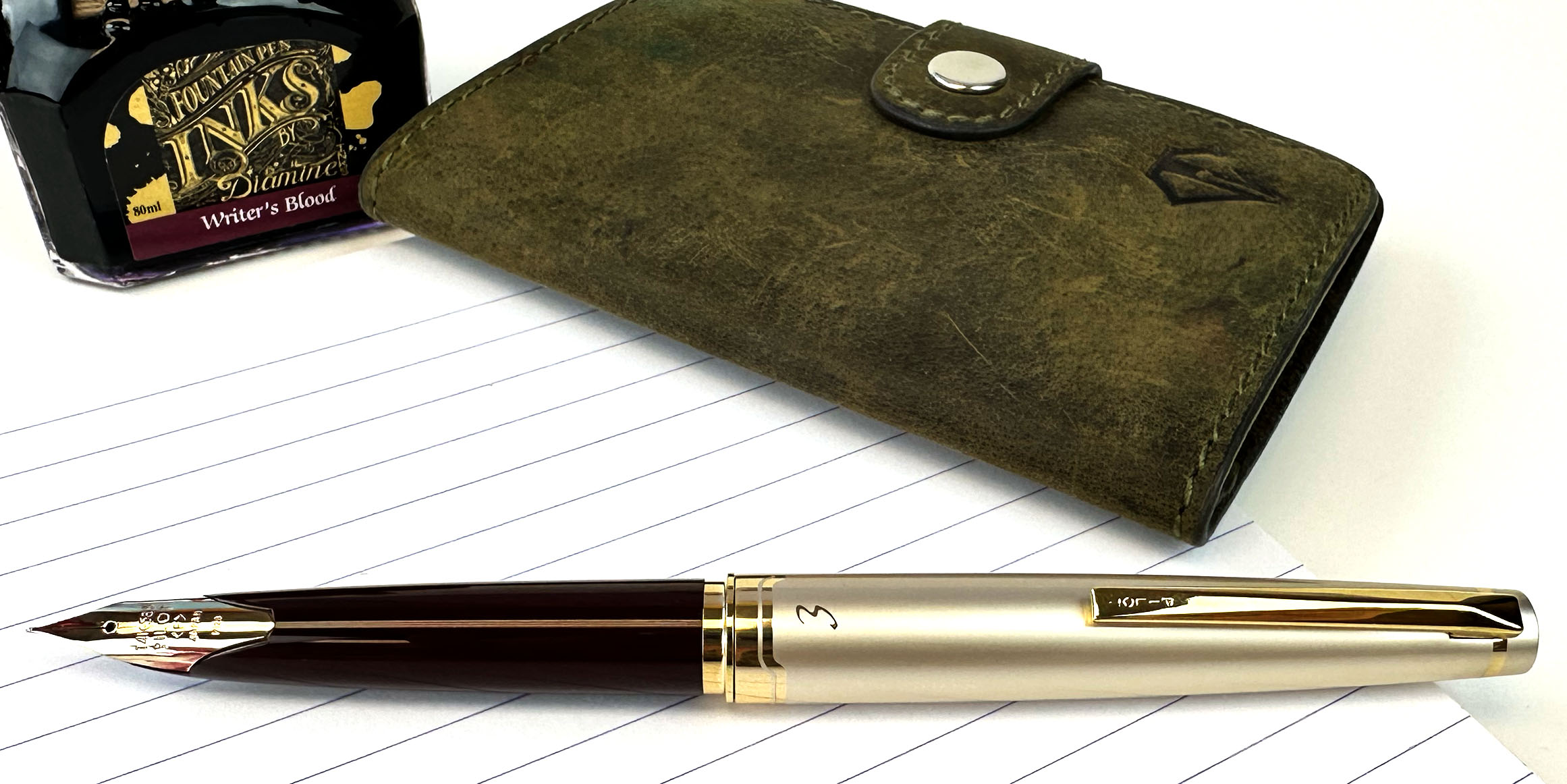
Diamine is one of the “comfort brands” of the fountain pen community: affordable, reliable, and quietly adventurous. Based in the UK and producing inks since the 19th century, they’ve built a huge catalog that runs from classic office blues and blacks to wild shimmer and sheen monsters.
Writer’s Blood ink sits in that sweet spot Diamine does so well: interesting and expressive, but still absolutely usable for everyday writing; especially if you like darker, moody reds.
Get to Know Diamine Writer’s Blood Ink
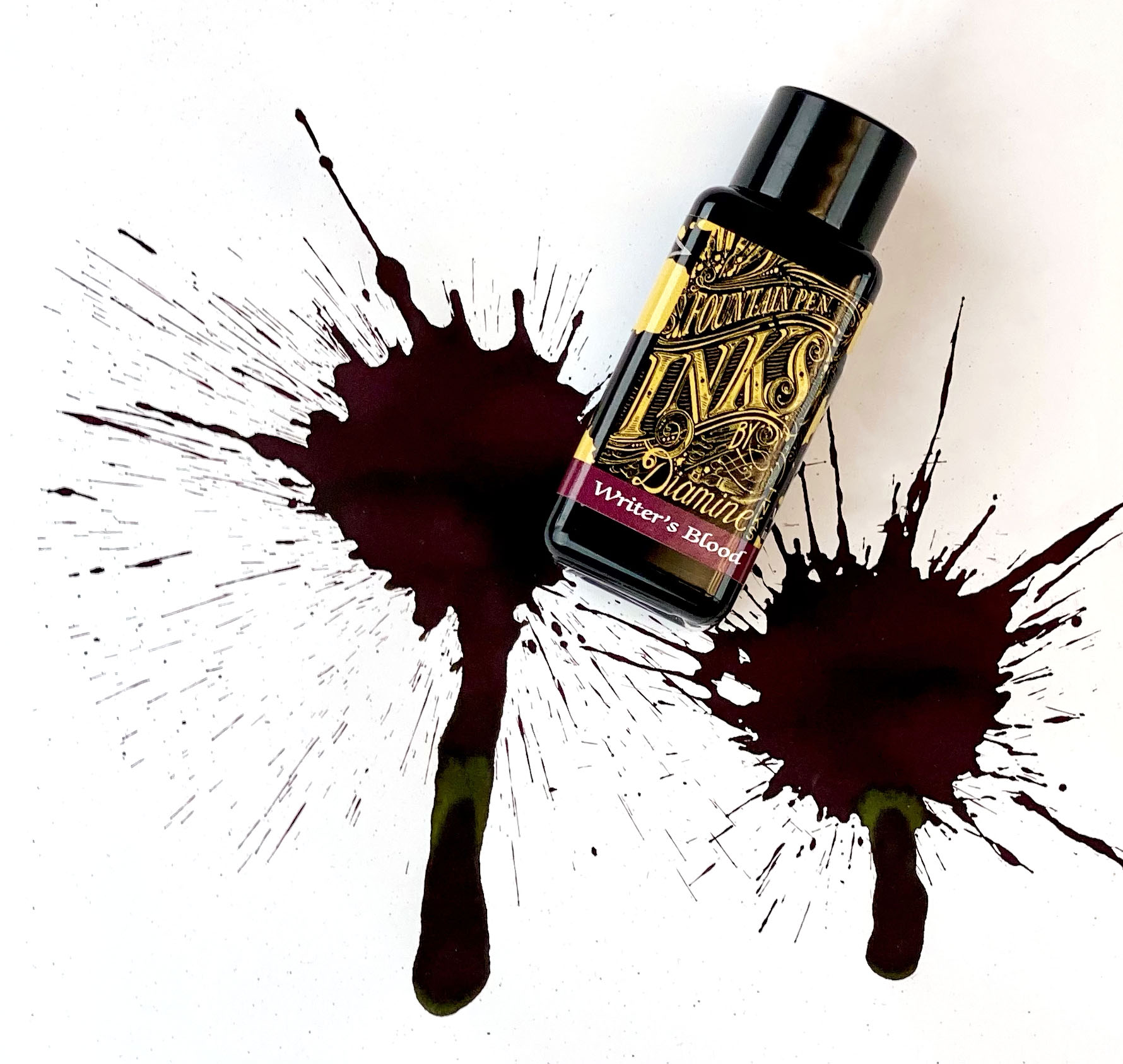
Diamine Writer’s Blood is a dark, saturated, purplish-red ink that can easily lean into burgundy territory. In normal writing, it often reads as:
Deep, dramatic burgundy…with subtle brown undertones. And, in some setups, you may even see a whisper of greenish sheen at the edges of heavy pools of this ink.
Depending on the pen, paper, and lighting, it can swing from “old manuscript dried blood” to “near-black professional;” which is a big part of this cult classic fountain pen ink’s appeal.
If you’re searching for a Diamine Writer’s Blood ink review because you want something a little gothic but still grown-up enough for meeting notes, this one is absolutely in your wheelhouse.
This Week’s Featured Ink: Diamine Writer’s Blood
In this Diamine Writer’s Blood ink review, we focused on:
- Color family: Dark burgundy / purplish-red
- Flow: Wet and very smooth
- Use case: Journaling, letters, editing, dramatic headings, and everyday writing (if you like darker inks
If you’re on the hunt for other favorite red inks from fountain pen fans, check this Reddit thread for moody red ink picks. If you just need a second opinion about this classic everyday red ink choice, read the ink review of the same Diamine favorite by Mountain of Ink.
- Behavior: Saturated, wet, easy-clean, but not water-resistant
This is also one of those inks that can help revive drier-writing pens. If you’ve got a pen that feels a little scratchy or starved for ink, pairing it with a wet ink like Writer’s Blood can give it a new lease on life.
Diamine Writer’s Blood Ink Review: Test Results
Materials Used:
- Pen: J. Herbin spiral glass dip pen (writes similar to a medium nib fountain pen)
- Paper: Rhodia lined paper (well-known for being fountain pen friendly) AND Clairefontaine paper (blank) for splashes
On Rhodia, Diamine Writer’s Blood behaved beautifully:
- Lines were crisp with no feathering
- No bleed through on the page
- The ink’s wet flow was immediately obvious in both line saturation and dry time
(If you switch to more absorbent or lower-quality paper, that same wetness means you’re more likely to see feathering or bleed through. Writer’s Blood rewards good paper).
Ink Bottle and Packaging
Diamine offers different bottle options, and Writer’s Blood typically shows up in:
- 30ml plastic bottle (most common). This bottle is tall, slim, and lightweight. The smaller ink bottle is great for storage, easy to travel with, and there’s less worry about breakage, BUT the narrow neck of the bottle makes filling large or chunky pens a little awkward.
- 80ml glass bottle (available for a more limited selection of inks, but DOES include Writer’s Blood ink). The larger ink bottle is wider, heavier, and has a more traditional ink bottle feel. It’s great for desk use if you go through a lot of ink.
All Diamine bottles arrive boxed, which helps with storage and light protection. If you love Diamine fountain pen inks and tend to go through favorites quickly, the 80ml glass bottle is worth hunting down; otherwise, the 30ml is an easy way to add Writer’s Blood to your collection without a big commitment.
Other Products Used During This Diamine Writer’s Blood Review
For this week’s tests, we used:
- J. Herbin spiral glass dip pen (medium-like line width) *these are great glass dip pens for ink testing.
- Rhodia lined notebook (smooth, fountain pen friendly paper)
If you want to recreate or compare our Diamine Writer’s Blood ink review results at home, any smooth, coated paper (Rhodia, Clairefontaine, etc.) and a medium nib will get you very close.
1-Dip Test
We love a good 1-Dip Test to see how far a single load of ink will go with a dip pen. With Diamine Writer’s Blood, one dip in the glass pen comfortably wrote three full lines of writing…plus some extra loops and swirls at the end. The lines stayed dark and saturated all the way through (no anemic final line). This tracks with its reputation as a very wet, saturated ink. If you enjoy long, uninterrupted notes or journaling sessions, this is a strong contender. However if you’re not quite sold, and you’re still looking for other dark red fountain pen inks, there are other options you should definitely check out!
Dry Time: How Fast Did Diamine Writer’s Blood Ink Dry?
On Rhodia paper using our glass dip pen (medium-like line), dry time was approximately 21 seconds.
On more absorbent paper or with finer nibs (EF/F), you may see shorter dry times, but in general, plan for slow-to-moderate dry times with this ink. It’s one of Diamine’s wetter inks, and you can feel it. If you are in search of fountain pen friendly paper like Rhodia, you can depend on a number of classic fountain pen friendly brands like Clairefontaine, Wearingeul Jaquere Impression, etc.
Diamine Writer’s Blood Ink Pros:
- Very smooth, lubricated writing experience
- Dark, consistent lines
Diamine Writer’s Blood Ink Cons:
- Left-handers or fast writers may need to watch for smudging
- Not ideal if you constantly close a notebook immediately after writing
If fast dry times are your top priority, Writer’s Blood probably won’t be your main “speed” ink; but for saturation and smoothness, it’s lovely.
Water Test: Is Diamine Writer’s Blood Water-Resistant?
Short answer: Nope.
During our water test on Rhodia we saw:
- Water exposure caused the ink to cloud, smear, and become illegible
- Lines blurred and feathered at the top of the test area
- Some faint, hazy shadows remained, but the original writing was no longer readable
However, that lack of water resistance does come with two big perks:
1. Easy cleanup: this ink flushes out of pens quickly with plain water, and is generally easy to remove from hands and most surfaces.
2. Fun for art and washes: If you enjoy creating ink washes or layered effects, the way Writer’s Blood breaks and clouds can be very interesting on purpose (just not ideal for important notes).
If you need archival notes or water resistance, this one’s better reserved for journaling, letters, or creative work; not official signatures or must-keep records.
Special Properties: Does Writer’s Blood Ink Have Shading Potential?
Despite being highly saturated, Diamine Writer’s Blood can show some shading, but, shading is more noticeable with finer or drier nibs AND slightly more absorbent papers. With broader/wetter nibs, the ink often reads as solid, dark burgundy with very minimal variation.
Does Writer’s Blood Ink Show Any Sheening Potential?
Writer’s Blood isn’t a high-sheen show-off, but in heavy applications on coated paper, you may catch a subtle greenish sheen around the heaviest pooled areas. However, it’s more of an occasional treat than a defining feature of the ink. This ink has no shimmer, no glitter…basically no gimmicks. It’s just a sophisticated, moody color with a very satisfying presence on the page.
Was There Any Feathering or Bleeding?
On Rhodia paper with the J. Herbin glass pen:
- Feathering: None observed
- Bleed through: None observed
But remember, on lower quality paper (think cheap office pads or copy paper):
- The ink’s wet flow and saturation can push it into:
- Noticeable feathering
- Show-through, and possibly some bleed through
If you’re planning to use Diamine Writer’s Blood for everyday office notes, pairing it with better paper will give you a much more controlled, crisp result.
Final Thoughts on Diamine Writer’s Blood Ink
Diamine Writer’s Blood has earned its reputation as a modern classic for a reason. It’s dramatic, dark, and versatile in a way that appeals to both the gothic-soul journaler and the professional who secretly loves moody inks. The ink offers several Pros. First and foremost, it is a stunning color; deep, dark burgundy that can appear almost black in wetter pens. Think gothic, romantic, and still perfectly usable in a professional setting. Another Pro is that Writer’s Blood ink is one of Diamine’s wetter nks offering excellent flow and lubrication (it’s even been known to revive “dry” fountain pens). This makes it a great match for pens that write dry or feel scratchy when you try to use more restrained inks. Writer’s Blood is has low water resistance, so it usually flushes out of your pen’s without any trouble, too. the only con I can think of is that the ink can be paper picky, but then…most fountain pen inks can be paper picky. That’s why “fountain pen friendly paper” is such an essential. You may also want to avoid using in demonstrators as you could end up seeing light staining.
If you like dramatic dark reds, already enjoy other Diamine fountain pen inks, or you’re building a lineup of burgundy fountain pen inks with personality, Diamine Writer’s Blood deserves a slot in your rotation.
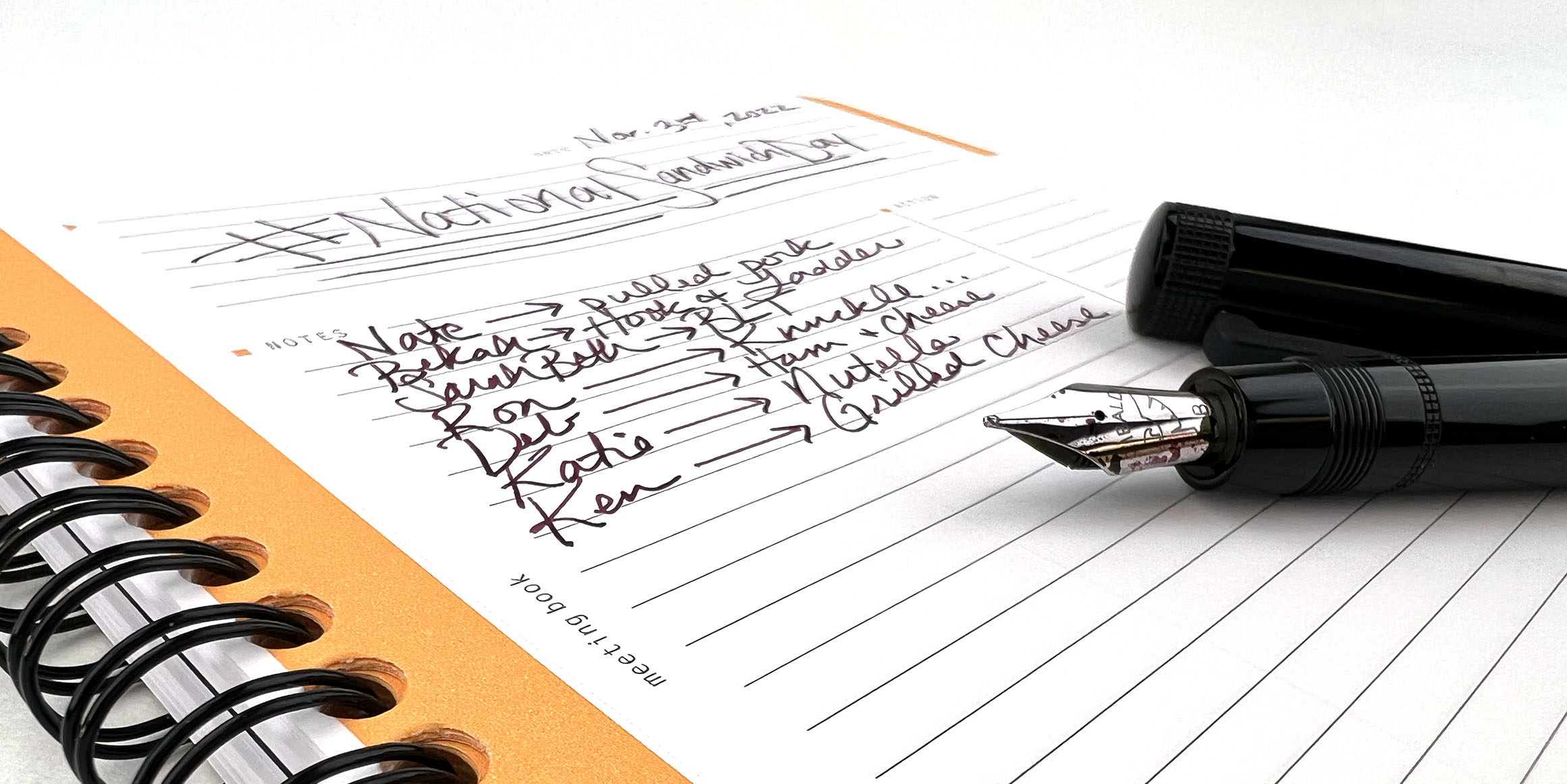
Have a favorite pen or nib you love pairing with Writer’s Blood? Or another dark red you want us to compare it with in a future review? Let us know which inks you’d like to see featured next. And shop your favorite pens, inks, and writing accessories at PenChalet.com.
FAQ: Diamine Writer’s Blood Ink
Q: Is Diamine Writer’s Blood safe for everyday use?
A: Yes. It’s a standard fountain pen ink (not an iron gall, waterproof, or permanent formula) and behaves well in most modern pens. Just avoid letting any ink dry out in a pen for long periods, and clean regularly.
Q: Does Diamine Writer’s Blood stain pens?
A: It can leave a slight pinkish or reddish cast in some clear demonstrators or easily stained plastics because it’s so saturated. Thorough cleaning usually removes it, but if you’re extremely protective of your clear pens, consider using it in opaque pens or pens that are easy to disassemble and clean.
Q: Is Diamine Writer’s Blood water-resistant?
A: No. Water exposure will cloud and smear the ink, making the writing illegible. Some hazy shadows may remain, but it’s not suitable for archival or water-sensitive documents.
Q: What nib sizes work best with Diamine Writer’s Blood?
A: Medium and broad nibs really showcase its rich, dark color. Finer nibs (EF/F) can bring out a bit more shading and shorten dry times. If your pen is already very wet, expect a very dark, almost-black result.
Q: How does Diamine Writer’s Blood compare to other burgundy inks?
A: Writer’s Blood leans darker, moodier, and more saturated than many classic burgundies. It feels more “gothic manuscript” than “wine red,” which is exactly why so many people love it.
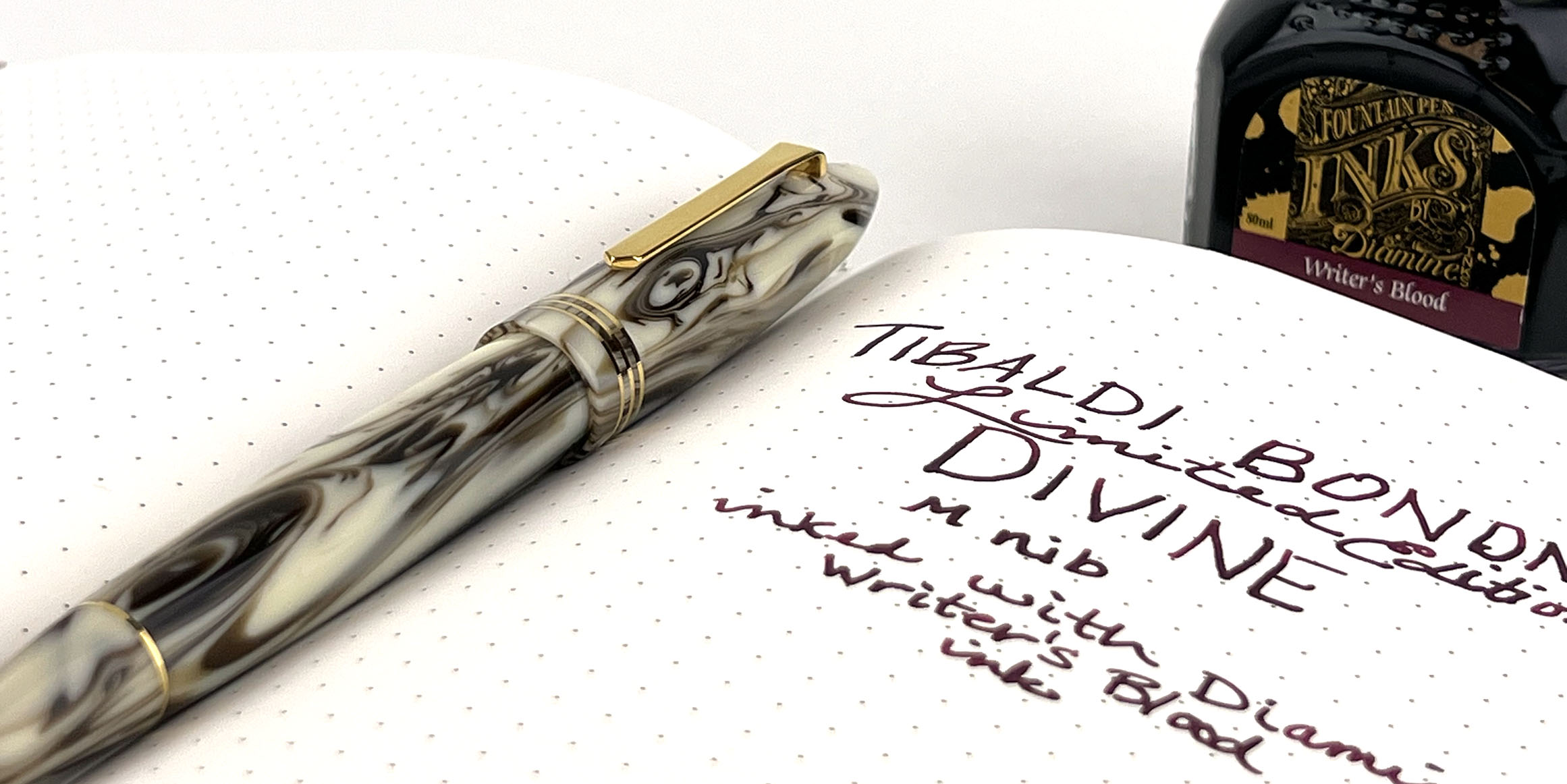
Q: Is Diamine Writer’s Blood good for journaling?
A: Absolutely. The smooth flow and deep color make long journaling sessions feel very satisfying, especially on good paper. Just give it a bit of extra dry time before closing your notebook.