




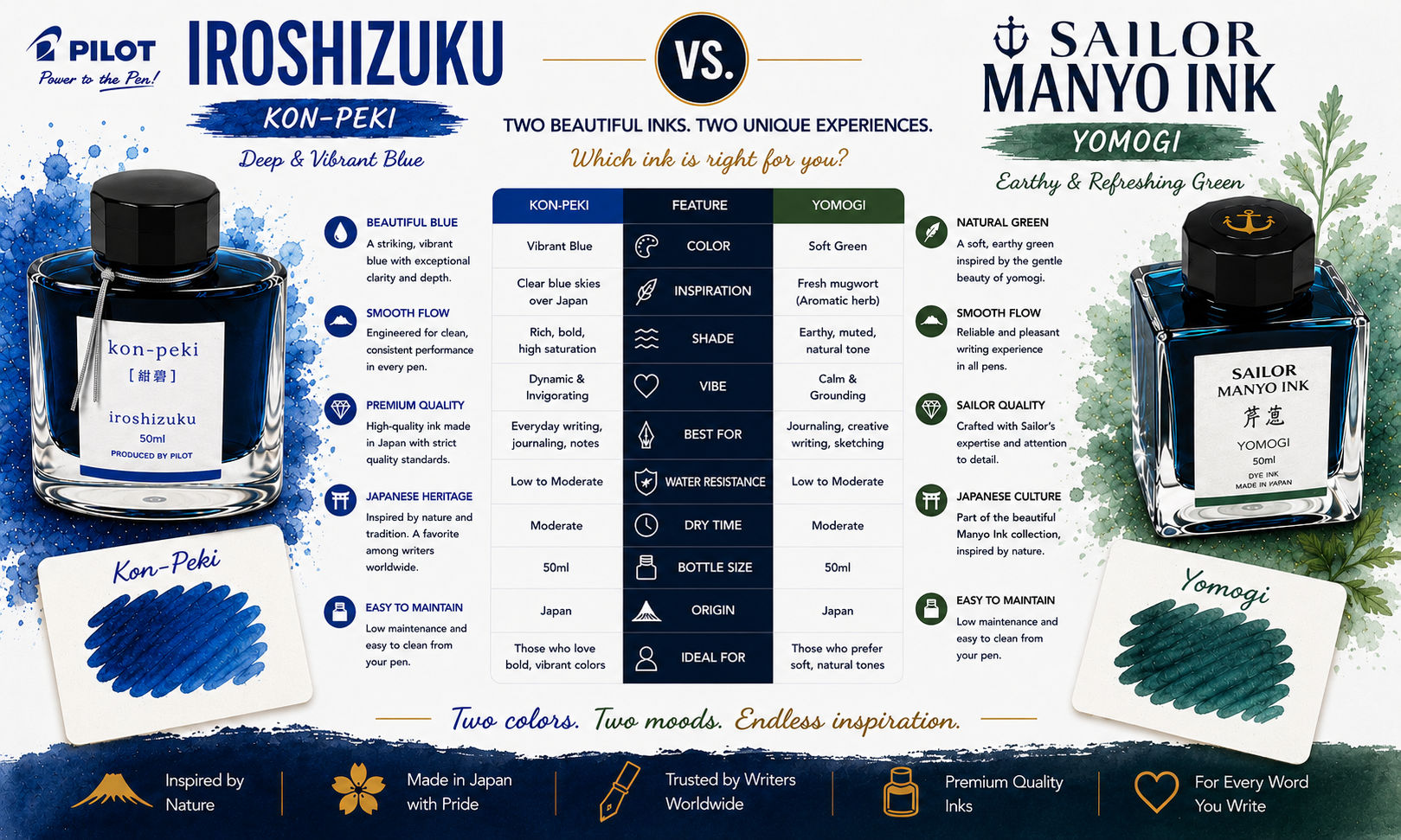
Pilot Iroshizuku Kon-Peki and Sailor Manyo Yomogi are two of the most popular blue fountain pen inks available today. While both are premium Japanese inks known for excellent performance, they offer very different writing experiences. Kon-Peki is famous for its bright, vibrant sky-blue color and exceptionally smooth flow, while Manyo Yomogi is admired for its unique blue-green tone, impressive shading, and distinctive personality.
If you're deciding between Kon-Peki and Yomogi, this guide compares color, shading, writing performance, dry time, and overall usability to help you choose the best blue ink for your fountain pen.
Kon-Peki vs Yomogi at a Glance
| Feature | Pilot Iroshizuku Kon-Peki | Sailor Manyo Yomogi |
|---|---|---|
| Brand | Pilot Iroshizuku | Sailor Manyo |
| Country | Japan | Japan |
| Color Family | Bright Blue | Blue-Green |
| Flow | Wet | Moderate to Wet |
| Lubrication | Outstanding | Excellent |
| Shading | Good | Outstanding |
| Sheen | Low to Moderate | Moderate |
| Best For | Everyday Writing | Journaling & Creative Writing |
Pilot Iroshizuku Kon-Peki Overview
Kon-Peki is one of the most popular fountain pen inks in the world. Inspired by a deep blue sky, it offers a bright, cheerful blue color that remains professional enough for daily writing. Explore the entire Pilot Iroshuzuku ink collection, one of just several popular Pilot fountain pen inks.
Why writers love Kon-Peki:
- Exceptionally smooth flow
- Vibrant but readable blue color
- Excellent behavior in most fountain pens
- Great everyday writing ink
- Easy to recommend to beginners
Kon-Peki is frequently mentioned in our guides to Best Fountain Pen Ink Colors and Best Fountain Pen Inks for Everyday Writing.
Sailor Manyo Yomogi Overview
Sailor Manyo Yomogi is one of the standout inks in the Sailor Manyo ink collection. Unlike traditional blue inks, Yomogi combines blue and green tones to create a distinctive color that changes character depending on paper and nib size.
Why writers love Yomogi:
- Unique blue-green color
- Excellent shading characteristics
- Complex color variation
- Beautiful journaling ink
- Highly expressive writing appearance
Explore all of the fountain pen inks by Sailor.
Color Comparison
The biggest difference between these inks is their color.
| Color Characteristic | Kon-Peki | Yomogi |
|---|---|---|
| Primary Color | Bright Blue | Blue-Green |
| Professional Appearance | Excellent | Very Good |
| Uniqueness | Moderate | Outstanding |
| Everyday Use | Excellent | Very Good |
Kon-Peki is a pure, vibrant blue. Yomogi is more complex, with noticeable teal and green undertones.
Writing Performance and Flow
Kon-Peki is widely regarded as one of the smoothest writing fountain pen inks available.
Yomogi is also an excellent performer, but its character comes more from shading and color variation than pure lubrication.
Learn more about flow characteristics in our guide to Wet vs Dry Fountain Pen Inks.
| Writing Characteristic | Kon-Peki | Yomogi |
|---|---|---|
| Flow | Wet | Moderate to Wet |
| Lubrication | Outstanding | Excellent |
| Smoothness | Outstanding | Excellent |
| Consistency | Excellent | Excellent |
Shading Comparison
This is where Sailor Manyo Yomogi shines.
While Kon-Peki offers some shading, Yomogi from the Sailor pen company is known for dramatic color variation that gives writing greater depth and personality.
Writers who enjoy seeing light and dark transitions within their handwriting often prefer Yomogi.
Related guide:
| Shading Characteristic | Kon-Peki | Yomogi |
|---|---|---|
| Subtle Shading | Good | Excellent |
| Dramatic Shading | Moderate | Outstanding |
| Color Complexity | Moderate | Outstanding |
Dry Time Comparison
Both inks generally dry within a reasonable timeframe, although Kon-Peki's wetter flow may slightly increase dry times on coated fountain pen paper.
Actual results depend on nib size, paper, and writing style.
For more information, see our Guide to Fountain Pen Ink Drying Times.
Dye vs Pigment Considerations
Both Kon-Peki and Yomogi are dye-based fountain pen inks designed for color, smooth writing, and visual appeal rather than document permanence.
For waterproof or archival writing, consider dedicated permanent inks instead.
Learn more in our guide to Dye vs Pigment Fountain Pen Ink.
Who Should Choose Kon-Peki?
- Everyday writers
- Office professionals
- Students
- Users seeking smooth flow
- Writers who want a vibrant blue ink
Who Should Choose Yomogi?
- Journalers
- Creative writers
- Shading ink enthusiasts
- Ink collectors
- Writers seeking a unique blue-green color
Final Verdict: Kon-Peki vs Yomogi
Both inks are outstanding, but they excel in different areas.
- Choose Pilot Iroshizuku Kon-Peki if you want one of the smoothest, most dependable blue fountain pen inks available.
- Choose Sailor Manyo Yomogi if you enjoy dramatic shading, unique colors, and a more expressive writing experience.
Kon-Peki is often the better everyday writing ink, while Yomogi is frequently preferred for journaling, correspondence, and showcasing ink characteristics.
Related Fountain Pen Ink Comparisons
- Sailor Manyo Ink vs Pilot Iroshizuku Ink
- Compare Sailor Inks vs Pilot Iroshizuku Ink
- Diamine Ink vs Pilot Iroshizuku Ink
- Compare Wet vs Dry Fountain Pen Inks
- Popular Fountain Pen Ink Colors
- Pilot Pen Company
Frequently Asked Questions
Is Kon-Peki better than Sailor Manyo Yomogi?
Kon-Peki is often preferred for everyday writing and smooth flow, while Yomogi is favored for shading, color complexity, and creative writing.
Which ink shades more, Kon-Peki or Yomogi?
Sailor Manyo Yomogi generally produces more dramatic shading and color variation than Pilot Iroshizuku Kon-Peki.
Which ink writes wetter, Kon-Peki or Yomogi?
Pilot Iroshizuku Kon-Peki generally writes wetter and provides more lubrication than Sailor Manyo Yomogi.
Is Sailor Manyo Yomogi a blue or green ink?
Sailor Manyo Yomogi is best described as a blue-green or teal-leaning ink with noticeable color complexity and shading.