




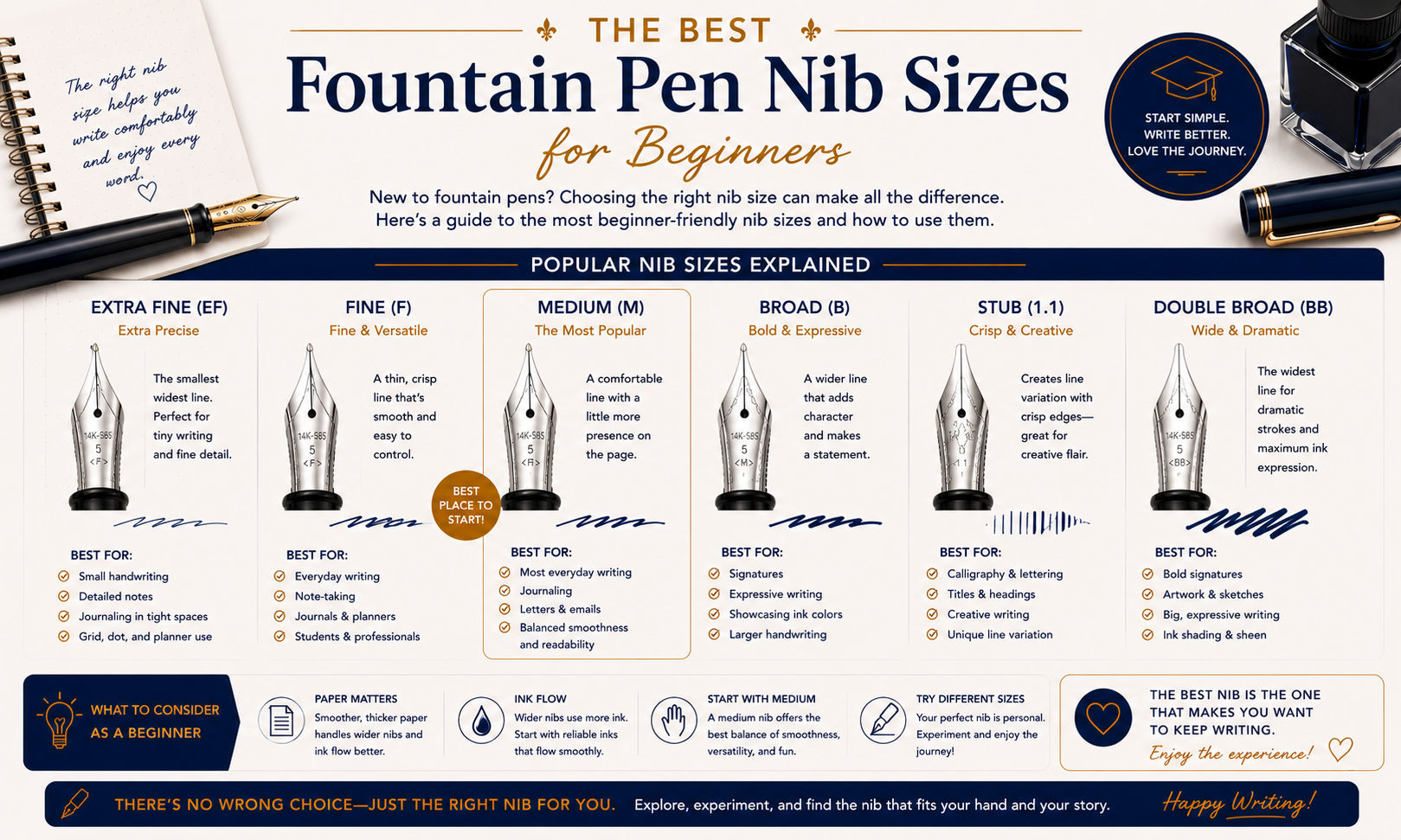
The best fountain pen nib size for beginners is usually a fine or medium nib because both offer a good balance of control, smoothness, and everyday usability. Fine nibs are great for smaller handwriting and standard paper, while medium nibs provide a smoother writing feel and show more ink character.
If you are new to fountain pens, choosing the right nib size can make your first writing experience much easier and more enjoyable.
Why Nib Size Matters for Beginners
The nib controls how much ink reaches the paper, how wide your lines appear, and how smooth the pen feels while writing. A nib that is too broad may feel too wet or smudge easily, while a nib that is too fine may feel more precise but offer more feedback on paper.
For a complete overview, read our guide to fountain pen nib sizes explained.
Best Overall Beginner Nib Size: Fine
A fine fountain pen nib is often the safest choice for beginners because it works well for everyday writing, note-taking, planners, schoolwork, and office use.
- Great for smaller handwriting
- Uses less ink
- Dries faster than broader nibs
- Works better on standard paper
- Helps reduce feathering and bleed-through
Fine nibs are especially practical if you are writing on ordinary notebook paper, office paper, or inexpensive journals.
Best Smooth Beginner Nib Size: Medium
A medium fountain pen nib is another excellent beginner option, especially for users who want a smoother and more classic fountain pen feel.
- Smoother writing experience
- More visible ink color
- Better for shading and sheen
- Comfortable for longer writing sessions
- Good balance of control and expressiveness
Medium nibs are ideal if you use fountain pen friendly paper and want to enjoy more ink character.
Fine vs Medium Nibs for Beginners
| Feature | Fine Nib | Medium Nib |
|---|---|---|
| Best For | Notes, planners, small handwriting | Journaling, everyday writing, smoother feel |
| Ink Use | Uses less ink | Uses more ink |
| Dry Time | Usually faster | Usually slower |
| Paper Compatibility | Better on standard paper | Better on fountain pen friendly paper |
| Writing Feel | More precise with slight feedback | Smoother and wetter |
For a deeper comparison, visit our guide to fine vs medium fountain pen nibs.
Should Beginners Avoid Extra Fine Nibs?
Extra fine nibs can be useful for very small handwriting or cheap paper, but they may feel less smooth to beginners because they have a smaller contact point with the paper.
If you are sensitive to paper feedback, a fine or medium nib may be a better first choice.
Should Beginners Avoid Broad Nibs?
Broad nibs can be fun and expressive, but they usually place more ink on the page. This can increase dry time, smudging, feathering, and bleed-through, especially on ordinary paper.
Beginners can absolutely use broad nibs, but they are usually better as a second nib once you understand your paper and ink preferences.
Japanese vs Western Beginner Nib Sizes
Japanese fountain pen nibs usually write finer than Western nibs with the same size label. For example, a Japanese medium may write closer to a Western fine.
This matters when choosing beginner pens from brands like Pilot, Sailor, Platinum, Lamy, Pelikan, or Kaweco.
Learn more in our guide to Japanese vs Western fountain pen nib sizes.
Best Beginner Nib Size by Writing Style
- Small handwriting: Extra fine or fine nib
- Everyday notes: Fine nib
- Journaling: Fine or medium nib
- Left-handed writing: Fine nib with fast-drying ink
- Ink shading and color: Medium nib
Best Nib Size for Standard Paper
If you write on standard office paper, school notebooks, or inexpensive journals, a fine nib is usually the best beginner choice. Fine nibs place less ink on the page, helping reduce feathering and bleed-through.
Read our guide to best fountain pen ink for cheap paper for ink recommendations that work well with finer nibs.
Best Nib Size for Fountain Pen Friendly Paper
If you use smoother paper designed for fountain pens, medium nibs become more appealing because they show off ink color, shading, and sheen more effectively.
Visit our guide to best paper for fountain pen use for paper suggestions.
Beginner-Friendly Fountain Pen Recommendations
Many popular beginner fountain pens are available in fine and medium nib sizes.
- Lamy Safari fountain pen
- Pilot Metropolitan fountain pen
- Kaweco Sport fountain pen
- TWSBI ECO fountain pen
- Platinum Preppy fountain pen
Explore our guide to best starter fountain pens for more beginner-friendly options.
Related Fountain Pen Guides
Visit our Fountain Pen Expert Advice Hub for more beginner guides, nib education, and fountain pen writing tips.
- Fine vs Medium Fountain Pen Nibs
- Fountain Pen Nib Sizes Explained
- Japanese vs Western Fountain Pen Nib Sizes
- How to Choose a Fountain Pen
- How to Write With a Fountain Pen
Frequently Asked Questions
What fountain pen nib size is best for beginners?
Fine and medium nibs are usually best for beginners. Fine nibs offer control and faster dry times, while medium nibs provide smoother writing.
Should beginners choose a fine or medium fountain pen nib?
Beginners should choose a fine nib for everyday paper and smaller handwriting, or a medium nib for smoother writing and better ink color visibility.
Is an extra fine nib good for beginners?
Extra fine nibs can work well for small handwriting and cheap paper, but they may feel less smooth than fine or medium nibs.
Is a medium nib too broad for beginners?
A medium nib is not too broad for most beginners and can be a great choice for smoother writing, especially on fountain pen friendly paper.