




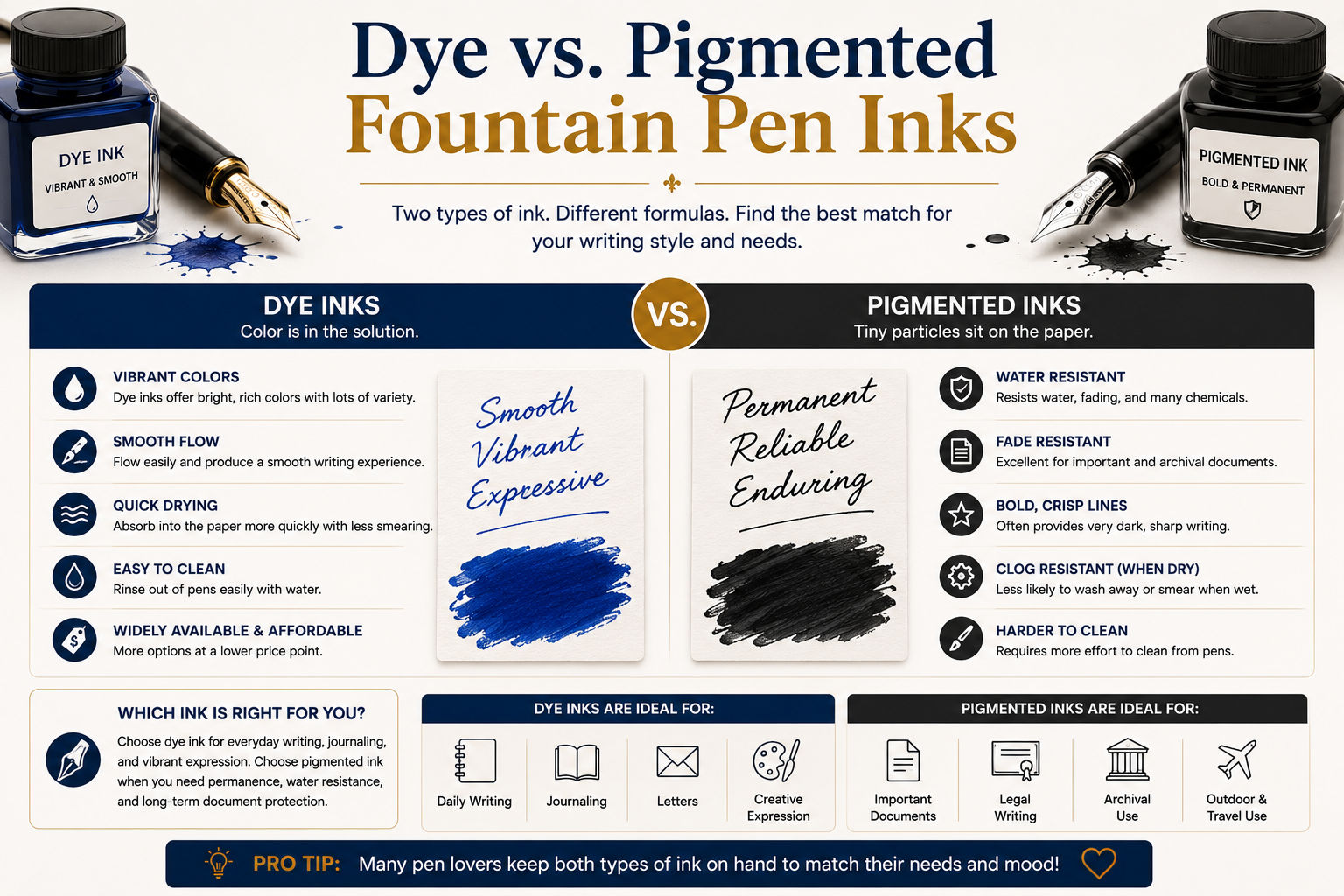
Dye-based and pigment fountain pen inks differ in how they create color, how they behave inside fountain pens, and how resistant they are to water and fading. Dye inks are generally smoother, easier to clean, and more beginner-friendly, while pigment inks offer stronger permanence and waterproof performance.
If you use fountain pens regularly, understanding the difference between dye and pigment inks can help you choose the right ink for everyday writing, journaling, artwork, or archival documents.
What Is Dye-Based Fountain Pen Ink?
Dye-based fountain pen ink uses dissolved colorants that fully blend into the liquid ink solution. This is the most common type of fountain pen ink and is widely used because of its smooth flow, vibrant colors, easy cleaning, and broad compatibility with fountain pens.
Most everyday inks for fountain pens are dye-based inks.
Benefits of Dye-Based Fountain Pen Ink
- Smooth and consistent flow
- Easier to clean from fountain pens
- Large variety of colors and effects
- Excellent shading and sheen potential
- Generally safer for beginners
Potential Drawbacks of Dye Ink
- Usually not waterproof
- May fade over time with light exposure
- Less archival than pigment-based inks
What Is Pigment Fountain Pen Ink?
Pigment fountain pen ink uses tiny solid pigment particles suspended in liquid rather than dissolved dyes. Once dry, the pigment particles bond to the paper surface, creating improved water resistance and permanence.
Pigment inks are especially popular for artwork, professional documents, and archival writing.
Benefits of Pigment Fountain Pen Ink
- Strong waterproof performance
- Better archival permanence
- Excellent for artwork and sketching
- More resistant to fading and smearing
Potential Drawbacks of Pigment Ink
- Requires more fountain pen maintenance
- Can be harder to clean
- May clog if left unused for long periods
- Fewer color options compared to dye inks
Dye Ink vs Pigment Ink: Main Differences
| Feature | Dye-Based Ink | Pigment Ink |
|---|---|---|
| Water Resistance | Usually low | High |
| Ease of Cleaning | Easy | Requires more cleaning |
| Color Variety | Very large selection | More limited |
| Archival Quality | Moderate | Excellent |
| Best Use Cases | Everyday writing, journaling | Documents, art, permanence |
Best Dye-Based Fountain Pen Inks
Popular dye-based fountain pen inks include:
- Pilot Iroshizuku Kon-Peki
- Diamine Oxford Blue
- J. Herbin Perle Noire
- Waterman Serenity Blue
- Monteverde Noir Inks
These inks are known for smooth flow, vibrant colors, and excellent everyday usability.
Best Pigment Fountain Pen Inks
Popular pigment fountain pen inks include:
- Platinum Carbon Black
- Sailor Pigmented in Kiwa-Guro
- De Atramentis Document Inks
- Sailor Pigmented in Sei-Boku
These inks are especially popular among artists, journalers, and users who need waterproof or archival writing.
For more permanent ink recommendations, visit our waterproof fountain pen ink guide.
Which Ink Is Better for Beginners?
Dye-based fountain pen inks are usually better for beginners because they are easier to clean, widely compatible, and lower maintenance.
Beginners learning how to write with a fountain pen often benefit from starting with reliable dye-based inks before experimenting with pigment inks.
Which Ink Is Better for Artists?
Many artists prefer pigment fountain pen inks because they offer stronger water resistance and work well with watercolor washes and mixed media techniques.
However, dye-based inks are also popular for expressive sketching because of their shading and color variety.
Do Pigment Fountain Pen Inks Require More Cleaning?
Yes, pigment inks usually require more frequent fountain pen cleaning because pigment particles can build up inside the feed and nib over time.
Regular maintenance helps prevent clogging and inconsistent ink flow.
Follow our guide on how to clean a fountain pen for maintenance recommendations.
Can Any Fountain Pen Use Pigment Ink?
Most modern fountain pens can safely use pigment inks when cleaned regularly. Pens with reliable sealing caps and good ink flow often perform best with permanent or pigment-based inks.
Many users prefer using easily maintainable modern fountain pens for pigment inks.
Bottled Ink and Converters
Most pigment fountain pen inks are available as bottled inks. Using a converter allows fountain pen users to access a wider variety of permanent and archival inks.
Learn more in our guide to what is a fountain pen converter.
Related Fountain Pen Guides
Visit our Fountain Pen Ink Expert Advice Hub for more fountain pen ink guides, beginner tutorials, and maintenance articles.
- Waterproof Fountain Pen Ink Guide
- Best Black Fountain Pen Inks
- Best Fountain Pen Inks for Everyday Use
- Best Fountain Pen Ink Colors
- How to Clean a Fountain Pen
- best rated fountain pen inks
Frequently Asked Questions
What is the difference between dye and pigment fountain pen ink?
Dye-based fountain pen ink uses dissolved colorants for smooth flow and easy cleaning, while pigment fountain pen ink uses suspended particles for waterproof and archival performance.
Are pigment fountain pen inks waterproof?
Many pigment fountain pen inks are highly water resistant or waterproof once dry, making them popular for documents, artwork, and journaling.
Are dye-based fountain pen inks easier to clean?
Yes, dye-based fountain pen inks are generally easier to clean and maintain than pigment-based inks.
Should beginners use pigment fountain pen ink?
Most beginners start with dye-based fountain pen inks because they are easier to clean and maintain before moving into pigment-based waterproof inks.