




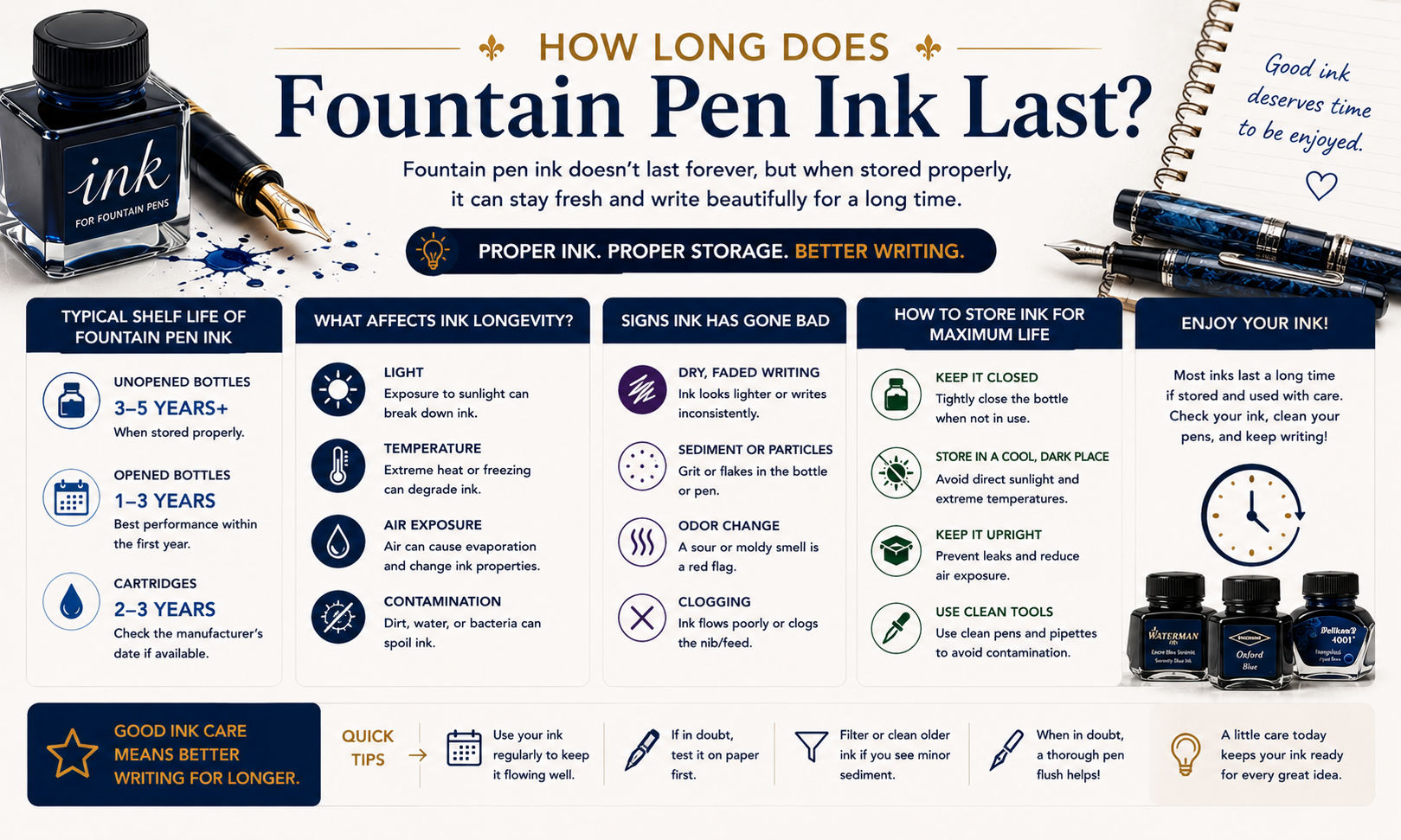
Fountain pen ink can last anywhere from a few days inside a pen to several decades in a sealed bottle. The exact lifespan depends on the ink formula, storage conditions, pen usage, and whether the ink is bottled or cartridge-based.
If you are wondering whether your favorite ink has gone bad, how long ink can safely stay inside a fountain pen, or how to properly store bottled ink, this guide covers everything you need to know. Browse our selection of quality fountain pen inks.
Looking specifically for cartridge lifespan? Read our related guide:
How Long Do Fountain Pen Ink Cartridges Last?
How Long Does Fountain Pen Ink Last in a Bottle?
Most bottled fountain pen inks last 10 to 60 years or more when stored properly. Unlike many art supplies, fountain pen ink contains preservatives and is designed for long-term use.
| Ink Type | Average Lifespan |
|---|---|
| Standard dye-based ink | 10–20+ years |
| Pigmented fountain pen ink | 5–10 years |
| Iron gall ink | 5–15 years |
| Shimmer ink | 3–10 years |
| Unopened bottle | Often decades |
Many collectors still use vintage fountain pen inks from the 1950s and earlier without issues.
What Makes Ink Last Longer?
- Stable room temperature
- Tightly sealed bottle caps
- Minimal sunlight exposure
- Clean filling habits
- Low humidity environments
Keeping bottles in a drawer, cabinet, or pen storage case helps preserve ink quality much longer.
How Long Does Fountain Pen Ink Last Inside a Pen?
Ink inside a fountain pen evaporates much faster than bottled ink because it is exposed to airflow through the feed and nib.
| Pen Seal Quality | Ink Longevity |
|---|---|
| Excellent sealing cap | 1–6 months |
| Average fountain pen | 2–6 weeks |
| Poor sealing pen | Days to 1 week |
Some fountain pens are specifically designed with airtight inner caps that dramatically slow evaporation.
What Happens When Ink Sits Too Long?
If fountain pen ink remains unused inside a pen for extended periods, you may notice:
- Hard starts
- Dry writing
- Ink darkening
- Clogged feeds
- Crust around the nib
- Increased skipping
Certain inks dry faster than others, especially shimmer inks, pigmented inks, iron gall inks, and highly saturated inks.
Signs Fountain Pen Ink Has Gone Bad
Mold or Slime
If you see fuzzy growth, stringy slime, or floating clumps, the ink is contaminated and should be discarded immediately.
Sour or Rotten Smell
Fresh fountain pen ink usually smells mild or chemical-like. A strong sour or rotten odor often indicates bacterial or mold contamination.
Thickened Consistency
Ink that becomes unusually thick or sticky may have excessive evaporation or contamination.
Color Changes
Some minor darkening over time is normal, but dramatic color separation or unusual sediment may signal problems.
Poor Flow Performance
If the ink suddenly writes poorly across multiple pens after previously performing well, it may have degraded.
Can Fountain Pen Ink Expire?
Technically yes, but expiration dates on fountain pen ink are usually conservative. Many inks remain perfectly usable far beyond their listed shelf life.
The biggest threat to fountain pen ink is contamination rather than age itself.
How Ink Becomes Contaminated
- Dirty pens touching the bottle opening
- Water entering the bottle
- Old ink mixed into fresh ink
- Improperly transferring samples
How to Make Fountain Pen Ink Last Longer
Store Bottles Away From Sunlight
UV exposure can alter dyes and degrade ink components over time.
Keep Bottles Sealed Tightly
Evaporation slowly changes ink concentration and flow behavior.
Use Clean Pens
Always flush pens before switching inks to avoid chemical contamination.
Avoid Extreme Temperatures
Very hot environments can accelerate evaporation and breakdown.
Fill Smaller Sample Vials
If a bottle is nearly empty, transferring ink to a smaller airtight container can reduce air exposure.
Does Ink Type Affect Longevity?
Dye-Based Fountain Pen Inks
These are the most stable and beginner-friendly inks. They usually last the longest both in bottles and in pens.
Pigmented Fountain Pen Inks
Pigment particles can settle over time and may clog pens if left unused.
Iron Gall Inks
Modern iron gall inks are safer than vintage versions, but they still require more regular pen cleaning.
Shimmer Fountain Pen Inks
Shimmer particles settle quickly and may dry inside feeds if pens are unused.
Helpful Fountain Pen Cleaning Guides
- How Often Should You Clean a Fountain Pen?
- How to Properly Store a Fountain Pen When Not In Use
- How to Clean a Dried Out Fountain Pen
- How to Clean a Cartridge Converter Style Fountain Pen
- How to Properly Clean a Fountain Pen
- How to Clean a Piston Style Fountain Pen
Can You Revive Dried Fountain Pen Ink?
Ink in a Bottle
If evaporation thickened the ink slightly, adding a tiny amount of distilled water may help restore flow. Do not use tap water.
Ink Dried in a Pen
Most dried fountain pen ink can be cleaned with cool water flushing, pen flush solution, or gentle soaking.
Best Practices for Long-Term Fountain Pen Storage
If you will not use a fountain pen for several weeks or months:
- Empty the ink
- Flush the pen thoroughly
- Allow it to dry completely
- Store horizontally or upright
- Keep away from heat and sunlight
Frequently Asked Questions
Does fountain pen ink go bad?
Yes, fountain pen ink can eventually go bad due to contamination, mold, evaporation, or age. Properly stored ink often lasts for decades.
How long can fountain pen ink stay in a pen?
Ink can remain usable inside a fountain pen from several days to several months depending on the pen’s cap seal and the ink type.
How can you tell if fountain pen ink is bad?
Signs of bad fountain pen ink include mold, slime, foul odors, thickened consistency, color separation, and poor writing performance.
Can old fountain pen ink still be used?
Many old fountain pen inks remain usable for decades if they were stored properly and show no signs of contamination.
What fountain pen inks dry out the fastest?
Shimmer inks, pigmented inks, iron gall inks, and highly saturated inks tend to dry faster inside fountain pens.
Should fountain pens be cleaned before storing?
Yes, fountain pens should be fully cleaned and dried before long-term storage to prevent dried ink buildup and clogging.