




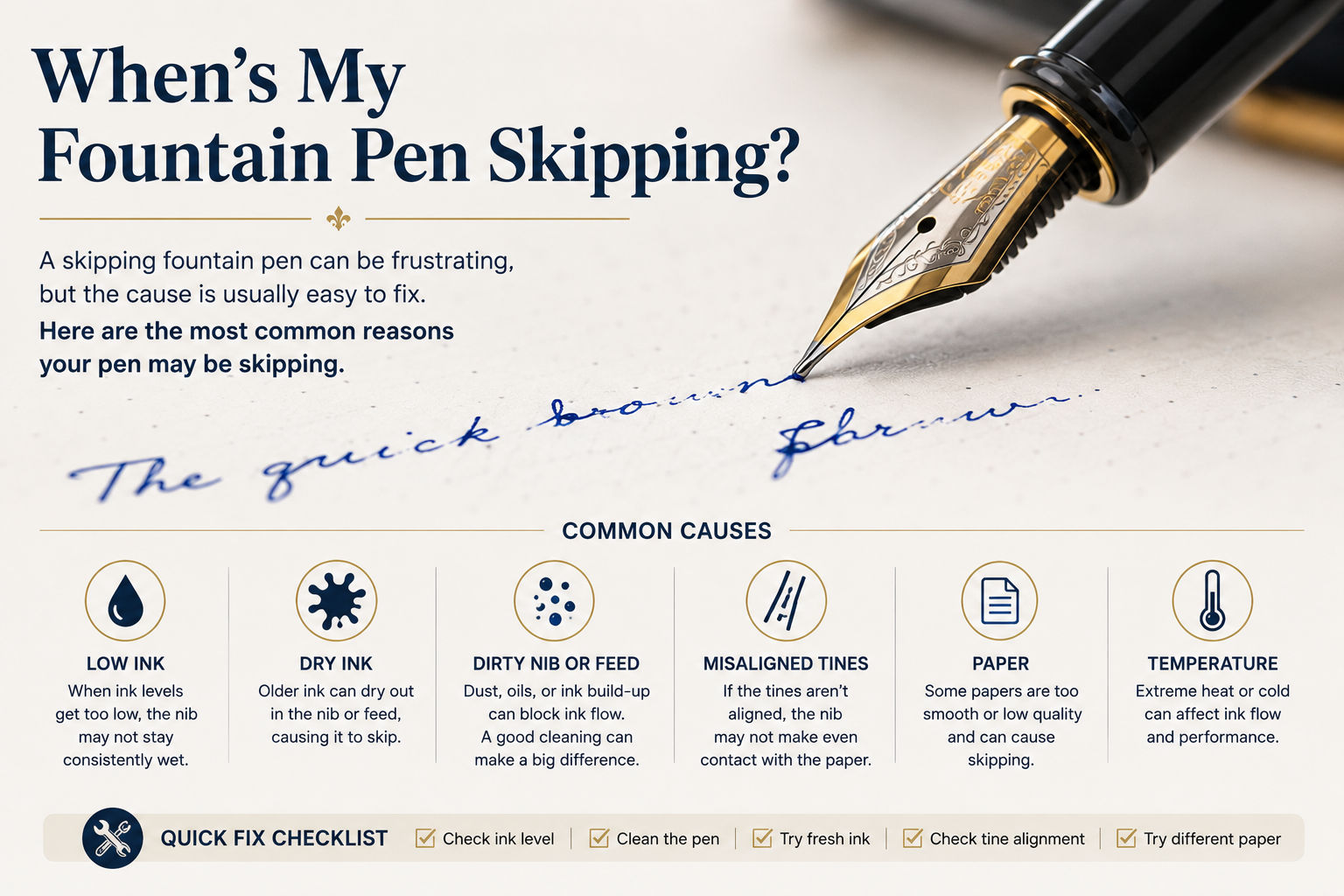
A fountain pen that skips while writing can be frustrating, especially when the pen previously worked well. Fountain pen skipping is usually caused by interrupted ink flow, dried ink buildup, paper issues, or nib alignment problems. Fortunately, most skipping problems can be fixed with simple cleaning and maintenance.
If your fountain pen is skipping, hard starting, or writing inconsistently, understanding the most common causes can help restore smooth writing performance.
What Does Fountain Pen Skipping Mean?
Skipping occurs when your fountain pen stops laying down ink consistently while writing. You may notice missing strokes, uneven lines, or sections where the pen temporarily stops writing altogether.
In many cases, skipping is a temporary issue caused by ink flow interruption rather than permanent damage to the pen.
Most Common Reasons a Fountain Pen Skips
1. Dried Ink in the Feed or Nib
Dried ink buildup is one of the most common causes of fountain pen skipping. Over time, ink residue can clog the feed and reduce proper ink flow to the nib.
Cleaning your pen regularly helps prevent buildup and keeps ink flowing properly. Follow our guide on how to clean a fountain pen for step-by-step maintenance instructions.
2. Low Ink or Empty Cartridge
Sometimes the issue is simply low ink. Check whether your converter, cartridge, or filling system still contains enough ink to maintain proper flow.
If needed, refill your pen using fountain pen ink or replace your cartridge with compatible fountain pen ink cartridges.
3. Poor Paper Quality
Some paper types absorb ink unevenly or contain fibers that interfere with fountain pen performance. Rough or highly absorbent paper may cause skipping, feathering, or inconsistent lines.
Fountain pens generally perform best on smoother, fountain pen-friendly paper.
4. Nib Alignment Issues
If the nib tines are slightly misaligned, ink flow may become inconsistent. Even small alignment issues can affect how smoothly the pen writes.
If your pen was dropped or handled roughly, inspect the nib carefully. You may also want to explore our selection of replacement fountain pen nibs if your nib is damaged.
5. Ink Flow Problems
Some fountain pen inks flow drier or wetter than others. Very dry inks may increase skipping in certain pens, especially finer nibs.
Experimenting with different bottled fountain pen inks may improve performance depending on your pen and nib combination.
6. Oils or Debris on the Nib
Natural oils from your hands, dust, or paper fibers can occasionally interfere with ink flow. Cleaning the nib section usually resolves the issue.
How to Fix a Skipping Fountain Pen
Clean the Pen Thoroughly
Flushing the nib and feed with cool water is often the fastest solution. Many skipping issues disappear after a proper cleaning.
Check the Ink Supply
Ensure your converter or cartridge is properly seated and contains enough ink.
Try Different Paper
Switching to smoother paper may improve ink flow and writing consistency immediately.
Test Another Ink
Some inks behave differently depending on nib size and pen design. Trying another ink may help improve flow.
Inspect the Nib
If skipping continues, inspect the nib under good lighting to see if the tines appear uneven or bent.
Can a New Fountain Pen Skip?
Yes, even new fountain pens can occasionally skip during the first fill or while the feed becomes fully saturated with ink. In many cases, writing a few lines or gently flushing the pen solves the problem.
If you are new to fountain pens, our article on are fountain pens worth it explains some of the differences between fountain pens and other writing instruments, including maintenance expectations.
How to Prevent Fountain Pen Skipping
- Clean your fountain pen regularly
- Use quality fountain pen ink
- Store pens capped when not in use
- Avoid leaving ink unused for long periods
- Use paper that works well with fountain pens
Choosing the Right Nib Can Help
Nib size and design can affect ink flow and writing consistency. Broader nibs generally flow wetter, while finer nibs may feel drier depending on the ink and paper combination.
Learn more in our guide to fountain pen nib sizes explained.
Related Fountain Pen Guides
Visit our Fountain Pen Expert Advice Hub for more fountain pen troubleshooting, maintenance, and buying guides.
- Are Fountain Pens Worth It?
- How to Clean a Fountain Pen
- Gold Nib vs Steel Nib Fountain Pens
- Bottled Ink vs Cartridge Ink
- Fountain Pen Nib Sizes Explained
Frequently Asked Questions
Why is my fountain pen skipping while writing?
Fountain pen skipping is usually caused by dried ink buildup, low ink levels, poor paper quality, nib alignment issues, or interrupted ink flow.
Can cleaning a fountain pen fix skipping?
Yes, cleaning the nib and feed often resolves skipping problems caused by dried ink or clogged ink channels.
Does paper affect fountain pen skipping?
Yes, rough or highly absorbent paper can interfere with ink flow and cause fountain pens to skip or write inconsistently.
Why does my fountain pen skip with certain inks?
Some fountain pen inks flow drier or wetter than others, which can affect performance depending on your nib size and pen design.