




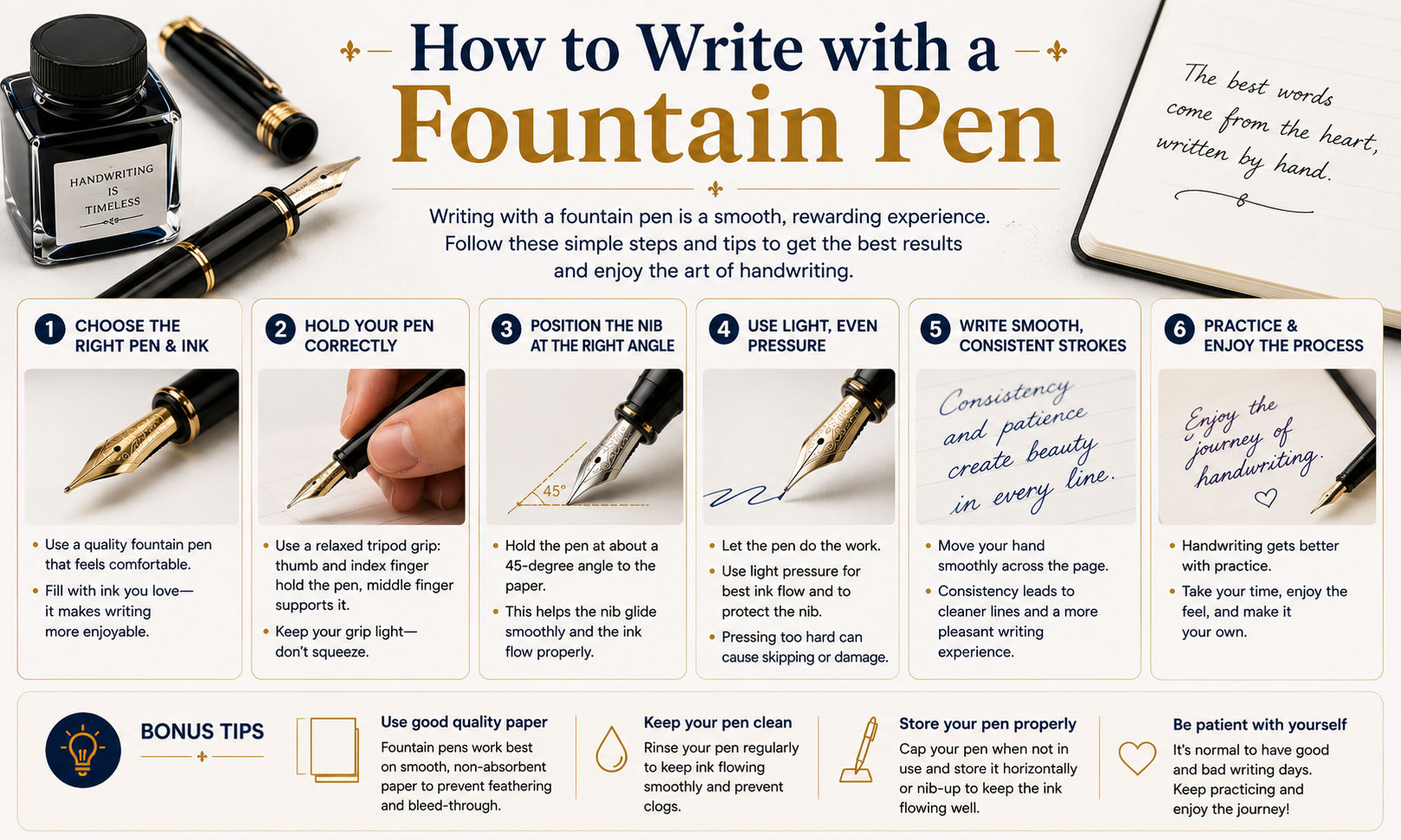
Writing with a fountain pen is different from using a ballpoint or rollerball pen. Fountain pens require less pressure, use liquid ink, and rely on proper nib angle and ink flow to create a smooth writing experience. Once you learn the basics, many writers find fountain pens more comfortable and enjoyable to use for everyday writing.
If you are new to quality fountain pens, learning the correct writing technique can help improve comfort, ink flow, and overall writing performance.
How Fountain Pens Work
Unlike ballpoint pens, fountain pens use liquid ink that flows through the nib and feed onto the paper. The nib is designed to glide across the page with minimal pressure while maintaining a steady ink flow.
Because fountain pens write differently than standard pens, beginners often need a short adjustment period to develop proper writing habits.
Use Less Pressure
One of the most important fountain pen techniques is using very little pressure while writing. Fountain pens are designed to write under their own weight, so pressing too hard can disrupt ink flow or even damage the nib.
Instead of pressing downward like a ballpoint pen, allow the nib to glide smoothly across the paper.
Hold the Pen at the Correct Angle
Most fountain pens write best when held at approximately a 40 to 55 degree angle relative to the paper. Holding the pen too upright or too flat can affect ink flow and cause skipping.
The nib slit should remain aligned with the direction of writing so both tines contact the paper evenly.
Use a Relaxed Grip
A relaxed grip helps improve comfort and allows the fountain pen to move naturally across the page. Tight grips can create excess pressure and reduce writing smoothness.
Many writers discover that fountain pens help reduce hand fatigue during long writing sessions because they require less force.
Choose the Right Nib Size
The nib size can significantly affect your writing experience. Fine nibs provide more precision and control, while medium and broad nibs usually feel smoother and show more ink variation.
Learn more in our guide to fountain pen nib sizes explained.
Use Fountain Pen Friendly Paper
Paper quality can greatly affect fountain pen performance. Smooth, fountain pen-friendly paper helps improve ink flow and reduce feathering or bleed-through.
Highly absorbent or rough paper may cause inconsistent writing or excessive ink spread. Here are some options for fountain pen friendly notebooks
Choose the Right Ink
Using quality fountain pen ink helps maintain smooth ink flow and better writing performance. Different inks can vary in flow, drying time, shading, and lubrication.
If you want access to a wider range of colors and ink properties, consider using bottled fountain pen ink with a converter.
How to Start Writing With a Fountain Pen
- Hold the pen gently with a relaxed grip
- Position the nib at a comfortable writing angle
- Use very light pressure
- Write slowly at first while adjusting to the ink flow
- Allow the pen to glide naturally across the paper
Common Beginner Mistakes
Pressing Too Hard
Fountain pens do not require heavy pressure. Pressing too hard can damage the nib and reduce smoothness.
Using the Wrong Paper
Low-quality paper may feather, bleed, or interfere with ink flow.
Incorrect Nib Angle
Holding the pen at an improper angle can cause skipping or inconsistent writing.
If your pen skips frequently, read our guide on why fountain pens skip.
Do Fountain Pens Improve Handwriting?
Many people feel that fountain pens encourage slower, more deliberate writing, which can improve handwriting consistency over time. The smoother writing experience may also help users develop better pen control.
Are Fountain Pens Better for Long Writing Sessions?
Because fountain pens require less pressure than ballpoint pens, many users find them more comfortable for journaling, note-taking, and extended writing sessions.
If you are still deciding whether fountain pens are right for you, read are fountain pens worth it.
Should Beginners Use Fountain Pens?
Yes, fountain pens can be excellent for beginners. Many entry-level fountain pens are affordable, reliable, and easy to maintain.
Explore our guide to best starter fountain pens for beginner-friendly recommendations.
How to Maintain Smooth Writing Performance
Regular cleaning helps prevent dried ink buildup and maintains smooth ink flow. Cleaning is especially important when changing inks or storing the pen for extended periods.
Follow our guide on how to clean a fountain pen for maintenance tips.
Related Fountain Pen Guides
Visit our Fountain Pen Expert Advice Hub for more beginner guides, comparisons, ink advice, and fountain pen maintenance articles.
- Are Fountain Pens Worth It?
- Fountain Pen Nib Sizes Explained
- What Is a Fountain Pen Converter?
- Bottled Ink vs Cartridge Ink
- Why Is My Fountain Pen Skipping?
Frequently Asked Questions
How do you properly write with a fountain pen?
Write with a fountain pen using a relaxed grip, light pressure, and a comfortable nib angle that allows smooth ink flow across the paper.
Do fountain pens require pressure to write?
No, fountain pens are designed to write with very little pressure because ink flows naturally through the nib onto the paper.
Why does my fountain pen skip while writing?
Skipping can occur because of dried ink buildup, improper nib angle, poor paper quality, or interrupted ink flow.
Are fountain pens good for beginners?
Yes, many fountain pens are beginner-friendly and provide a smooth writing experience once users learn the proper writing technique.