




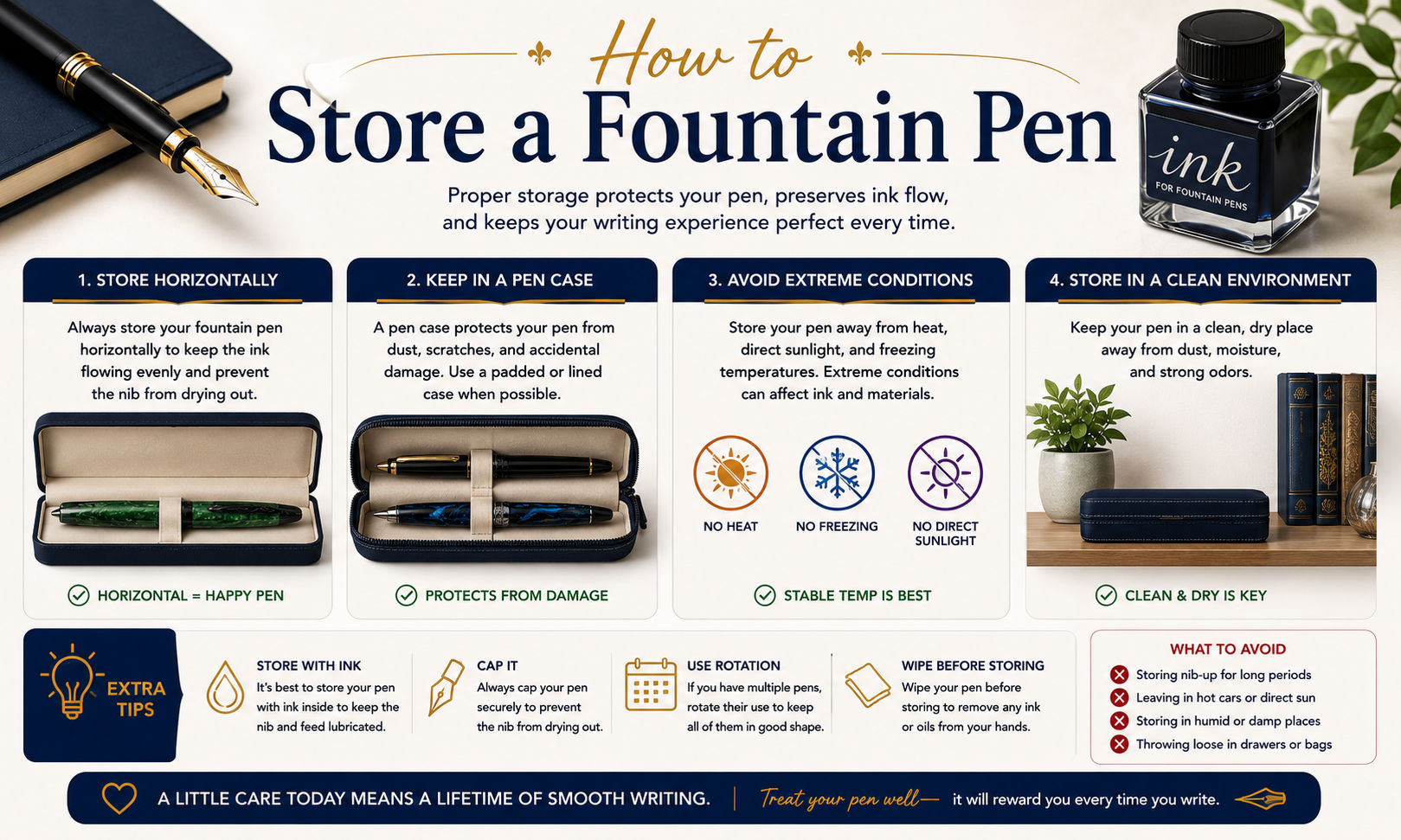
Proper fountain pen storage helps prevent ink drying, leaking, clogging, nib damage, and long-term wear. Whether you use your fountain pens daily or keep part of your collection stored between uses, proper storage habits can help maintain smooth writing performance and protect your pens over time.
Because fountain pens use liquid ink and precision nibs, they benefit from more careful storage than many standard writing instruments.
Should Fountain Pens Be Stored Horizontally or Vertically?
For most everyday use, fountain pens are best stored horizontally or with the nib pointing upward.
- Horizontal storage: Helps maintain balanced ink flow
- Nib-up storage: Reduces the chance of leaking or oversaturation
- Nib-down storage: Usually not recommended for long periods
Nib-down storage can sometimes cause excessive ink flow, leaking, or ink saturation inside the cap.
How to Store a Fountain Pen Daily
If you use your fountain pen regularly, storing it horizontally or nib-up between writing sessions is usually sufficient.
Always recap the pen securely after use to reduce ink evaporation and prevent the nib from drying out.
How to Store Fountain Pens Long-Term
If you plan to store a fountain pen for several weeks or months, it is usually best to clean the pen thoroughly before storage.
Steps for Long-Term Fountain Pen Storage
- Empty remaining ink from the pen
- Flush the pen with clean water
- Allow all components to dry completely
- Store the pen in a cool, dry environment
- Protect the pen from direct sunlight and extreme temperatures
Proper cleaning helps prevent dried ink buildup and clogging.
Follow our guide on how to clean a fountain pen before storing pens long-term.
Should Fountain Pens Be Stored Filled With Ink?
For short-term everyday use, storing a filled fountain pen is usually fine. However, for long-term storage, emptying and cleaning the pen is recommended.
Leaving ink inside a fountain pen for extended periods can increase the risk of:
- Dried ink buildup
- Clogging
- Hard starts
- Ink evaporation
How Temperature Affects Fountain Pen Storage
Extreme temperatures can affect fountain pen ink and pen materials.
Heat
High heat may increase ink expansion, leakage, or material warping.
Cold Temperatures
Very cold temperatures may temporarily affect ink flow and material performance.
Avoid leaving fountain pens in hot cars or direct sunlight whenever possible.
How to Store Fountain Pens While Traveling
Travel can affect fountain pen ink pressure, especially during flights or altitude changes.
Travel Storage Tips
- Keep pens nib-up during flights
- Avoid completely full pens when flying
- Use protective pen cases or sleeves
- Store pens securely to prevent impact damage
Shop our selection of carrying cases for pens.
Should You Use a Fountain Pen Case?
Yes, fountain pen cases help protect pens from scratches, impacts, dust, and accidental damage. Cases are especially useful for carrying multiple pens or storing collectible fountain pens.
Pen cases can also help reduce exposure to humidity, dirt, and sunlight. Shop our selection of storage and display cases for pens.
Can Fountain Pens Dry Out in Storage?
Yes, fountain pens can dry out if left unused for long periods, especially if they are not sealed properly or contain fast-drying ink.
Regular cleaning and proper capping help reduce drying problems.
If your pen has trouble starting after storage, read our guide on why fountain pens skip.
Best Fountain Pen Inks for Long-Term Storage
Some fountain pen inks are easier to clean and maintain than others. Dye-based everyday inks are often simpler for occasional use and storage than highly saturated, shimmer, or pigment-based inks.
Explore our guide to best everyday use fountain pen inks.
Should You Store Fountain Pens Empty?
Collectors and users with large pen collections often store unused fountain pens empty and cleaned to minimize maintenance and reduce ink-related issues.
Frequently used daily writers are usually safe to keep inked and ready to use.
Best Environment for Fountain Pen Storage
The best storage environment for fountain pens is:
- Cool and dry
- Away from direct sunlight
- Free from excessive humidity
- Protected from dust and impact damage
How Filling Systems Affect Storage
Different filling systems may behave differently during storage and travel.
- Cartridge/converter pens: Easy to clean and refill
- Piston fillers: Larger ink capacity for long writing sessions
- Eyedropper pens: May require extra caution during travel
Learn more in our guide to what is a fountain pen converter.
Related Fountain Pen Guides
Visit our Fountain Pen Expert Advice Hub for more maintenance tips, beginner guides, and fountain pen troubleshooting articles.
- How to Clean a Fountain Pen
- Why Is My Fountain Pen Skipping?
- How to Write With a Fountain Pen
- How to Choose a Fountain Pen
- Best Fountain Pen Inks for Everyday Use
Frequently Asked Questions
Should fountain pens be stored upright?
Fountain pens are usually best stored horizontally or nib-up to reduce leaking, oversaturation, and drying issues.
Can fountain pens dry out in storage?
Yes, fountain pens can dry out if left unused for long periods without proper sealing or maintenance.
Should fountain pens be cleaned before storage?
Yes, cleaning fountain pens before long-term storage helps prevent dried ink buildup and clogging.
Is it okay to store fountain pens filled with ink?
For everyday use, storing fountain pens filled with ink is usually fine, but long-term storage is safer after cleaning and emptying the pen.