




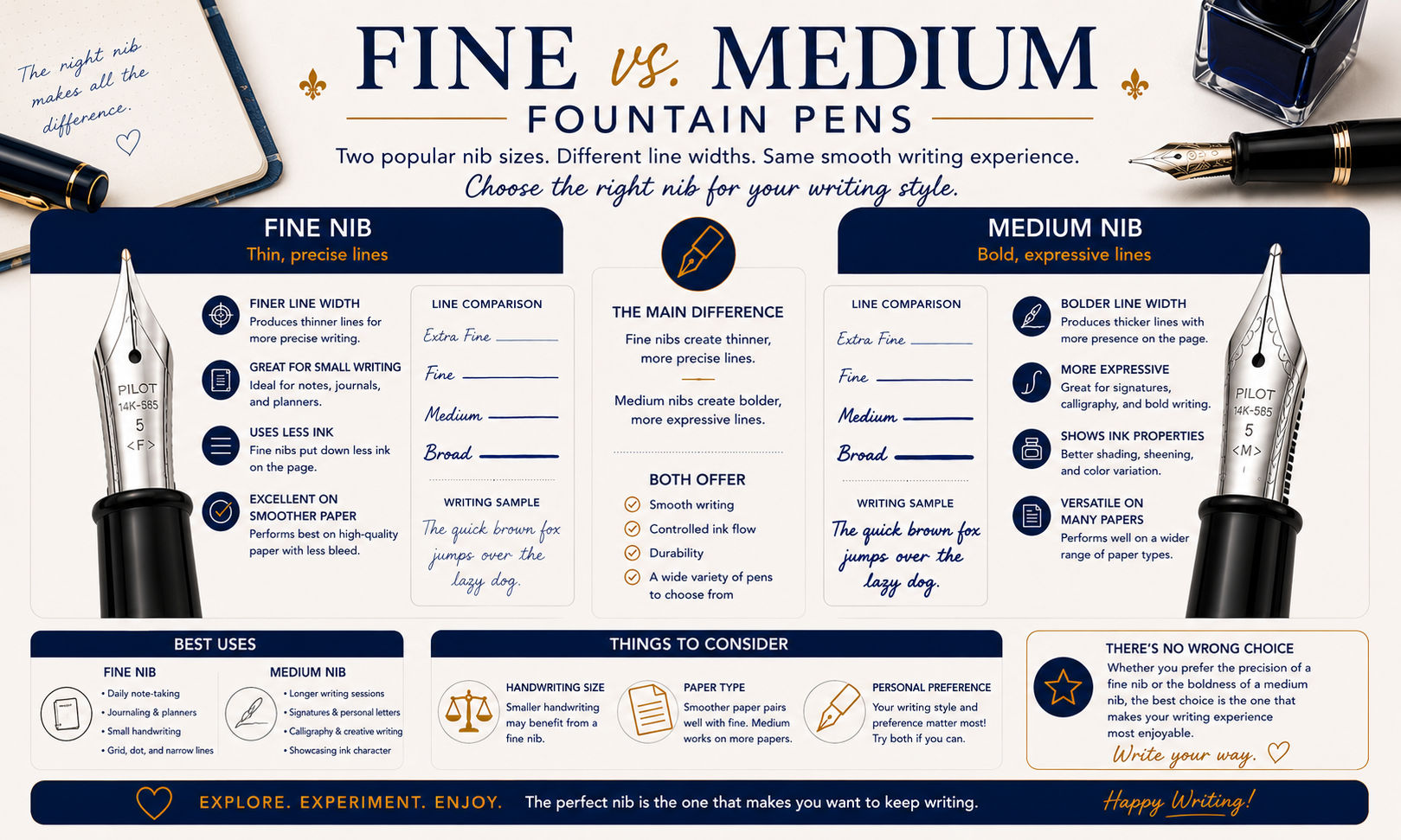
Fine and medium fountain pen nibs are two of the most popular nib sizes for everyday writing. While both are versatile and beginner-friendly, they create noticeably different writing experiences. Choosing between a fine vs medium fountain pen nib depends on your handwriting size, paper choice, writing style, and ink preferences.
Understanding how fountain pen nib sizes affect line width, smoothness, dry time, and ink flow can help you choose the nib that best matches your writing habits.
What Is a Fine Fountain Pen Nib?
A fine fountain pen nib creates a thinner line and typically uses less ink on the page. Fine nibs are popular for everyday writing, note-taking, office work, planners, and smaller handwriting styles.
Benefits of Fine Nibs
- Cleaner lines for smaller handwriting
- Better performance on cheap paper
- Faster dry times
- Reduced feathering and bleed-through
- Excellent for detailed writing
What Is a Medium Fountain Pen Nib?
A medium fountain pen nib produces a broader line and generally feels smoother because more of the nib touches the paper surface.
Medium nibs are extremely popular among fountain pen users because they balance smooth writing with moderate ink flow and readability.
Benefits of Medium Nibs
- Smoother writing feel
- More visible ink shading and sheen
- Comfortable for longer writing sessions
- Good balance between precision and expressiveness
- Popular beginner-friendly option
Fine vs Medium Fountain Pen Nib Comparison
| Feature | Fine Fountain Pen Nib | Medium Fountain Pen Nib |
|---|---|---|
| Line Width | Thinner and more precise | Broader and more expressive |
| Ink Flow | Uses less ink | Uses more ink |
| Dry Time | Usually faster drying | Usually slower drying |
| Paper Compatibility | Better for cheap paper | Better on fountain pen friendly paper |
| Writing Feel | More feedback and precision | Smoother and wetter feel |
| Best For | Notes, planners, detailed writing | Journaling, everyday writing, ink effects |
Which Nib Size Is Better for Beginners?
Both fine and medium nibs are excellent beginner choices, but they suit different writing styles.
- Fine nibs: Better for smaller handwriting and ordinary paper
- Medium nibs: Better for smoother writing and showcasing ink characteristics
If you primarily write on office paper or school notebooks, fine nibs are often more practical.
If you enjoy smoother writing and fountain pen ink properties such as shading and sheen, medium nibs may feel more satisfying. Read more about the best nib sizes for fountain pen beginners
Fine vs Medium Nibs on Cheap Paper
Fine nibs generally perform better on cheap paper because they place less ink onto the page. This helps reduce:
- Feathering
- Bleed-through
- Smudging
Medium nibs may produce more feathering on absorbent paper because they use more liquid ink.
Read:
Fine vs Medium Nibs for Ink Sheen and Shading
Medium nibs usually display fountain pen ink shading and sheen more effectively because they place more ink on the paper surface.
Fine nibs may still show shading and sheen, but the effects are often less dramatic.
Learn more:
Fine vs Medium Nibs for Left-Handed Writers
Many left-handed writers prefer fine nibs because they dry faster and reduce smudging risk. Medium nibs can still work well, especially with fast-drying inks and proper paper.
Read our guide to best fountain pens for left-handed writers.
Japanese Fine vs Western Medium Nibs
Japanese fountain pen nibs are often finer than Western nibs of the same labeled size.
For example, a Japanese medium nib may write similarly to a Western fine nib depending on the brand.
Learn more in our guide to Japanese vs Western fountain pen nib sizes.
How Paper Affects Fine and Medium Nibs
Paper quality changes how nib sizes feel and perform.
- Fine nibs are often more forgiving on cheap paper
- Medium nibs usually feel smoother on fountain pen friendly paper
- Smoother paper enhances shading and sheen visibility
Read our guide to best paper for fountain pen writing.
Should You Choose Fine or Medium?
Choose a fine fountain pen nib if you:
- Write small
- Use office paper
- Want faster dry times
- Prefer precision and cleaner lines
Choose a medium fountain pen nib if you:
- Prefer smoother writing
- Enjoy ink shading and sheen
- Use fountain pen friendly paper
- Like slightly broader lines
Additional Fountain Pen Nib Resources
This article focuses specifically on comparing fine and medium nib fountain pens.
For more nib education and sizing information, visit:
- Fountain Pen Nib Tipping Sizes
- Fountain Pen Nib Sizes Explained
- How to Choose the Right Nib Size for Fountain Pens
Related Fountain Pen Guides
Visit our Fountain Pen Expert Advice Hub for more fountain pen guides, nib education, and beginner writing tips.
- How to Choose a Fountain Pen
- Japanese vs Western Fountain Pen Nib Sizes
- How to Write With a Fountain Pen
- Best Fast-Drying Fountain Pen Inks
- Best Fountain Pen Paper
Frequently Asked Questions
Is a fine or medium fountain pen nib better?
Fine nibs are better for smaller handwriting and cheap paper, while medium nibs are often smoother and better for showing ink properties.
Do medium fountain pen nibs use more ink?
Yes, medium nibs generally use more ink because they place a broader line on the paper.
Are fine fountain pen nibs scratchy?
Fine nibs may provide more paper feedback than medium nibs, but properly tuned fine nibs should still feel smooth and controlled.
Which nib size dries faster?
Fine fountain pen nibs usually dry faster because they place less ink onto the paper.