




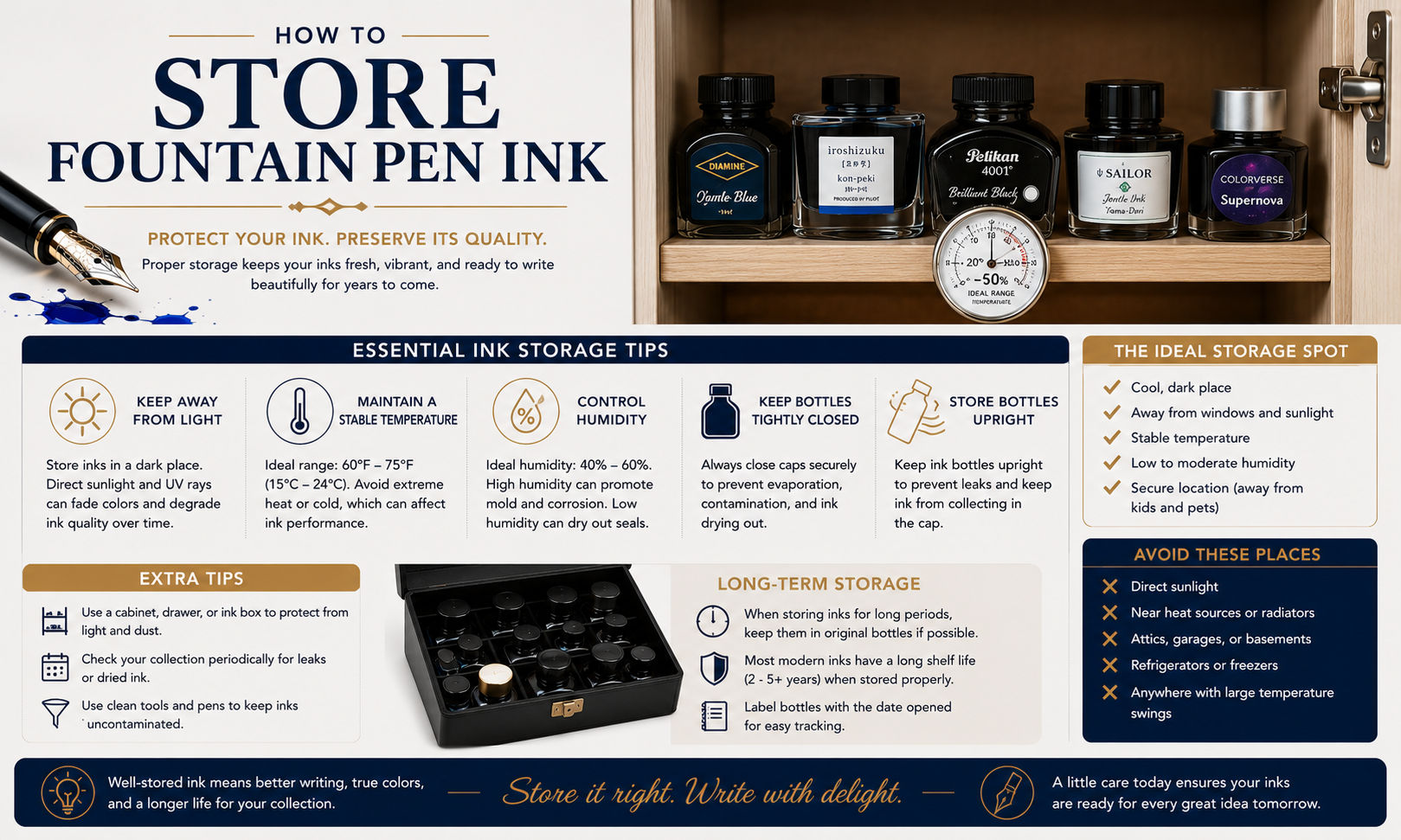
Proper fountain pen ink storage helps preserve ink quality, maintain color consistency, prevent contamination, and maximize the life of your ink collection. Whether you own a few bottles of everyday ink or a large collection of specialty fountain pen inks, understanding how to store fountain pen ink correctly can help ensure your inks remain safe and usable for years.
Most modern fountain pen inks have a long shelf life when stored properly, but exposure to heat, sunlight, contamination, and improper handling can reduce performance and potentially damage the ink.
Does Fountain Pen Ink Go Bad?
Many fountain pen inks can remain usable for years or even decades when stored correctly. However, ink can deteriorate if it becomes contaminated, evaporates excessively, or is exposed to unfavorable storage conditions.
Warning signs that an ink may no longer be suitable for use include:
- Unusual odor
- Mold growth
- Visible particles or contamination
- Significant color changes
- Unexpected changes in flow or performance
Store Fountain Pen Ink in a Cool, Stable Environment
The best place to store fountain pen ink is in a cool, dry location with relatively stable temperatures. Extreme heat can accelerate evaporation and potentially affect ink chemistry over time.
Ideal storage locations include:
- Office drawers
- Desk cabinets
- Bookshelves
- Storage cabinets
Avoid locations that experience significant temperature fluctuations.
Keep Fountain Pen Ink Out of Direct Sunlight
Direct sunlight can gradually affect some fountain pen inks, potentially causing color degradation and unnecessary heat exposure. UV light may also affect labels, packaging, and long-term appearance.
For best results, store ink bottles away from windows and direct sunlight.
Always Keep Ink Bottles Sealed Tightly
After filling a fountain pen, make sure the bottle cap is securely tightened. Properly sealing the bottle helps:
- Reduce evaporation
- Prevent contamination
- Maintain ink consistency
- Extend shelf life
Leaving bottles open for extended periods increases the risk of contamination and evaporation.
Prevent Fountain Pen Ink Contamination
Contamination is one of the most common causes of fountain pen ink problems. Bacteria, mold, paper fibers, dust, and residual cleaning solutions can all potentially affect ink quality.
To reduce contamination risk:
- Use clean pens and converters when filling
- Avoid touching ink directly
- Keep bottle openings clean
- Close bottles promptly after use
- Do not return unused ink from a dirty pen back into the bottle
Should You Store Fountain Pen Ink Upright?
Yes. Most fountain pen ink bottles should be stored upright whenever possible. Upright storage helps reduce the risk of leakage and prevents ink from sitting against the cap seal for extended periods.
This is especially important for partially used bottles and specialty bottle designs.
Can Fountain Pen Ink Be Stored in a Refrigerator?
For most users, refrigeration is not necessary. Modern fountain pen inks are designed to remain stable at normal room temperatures.
In fact, frequent temperature changes caused by moving bottles between refrigeration and room temperature can create condensation and may introduce additional storage concerns.
For most collections, a cool indoor environment is the better choice.
How Long Does Fountain Pen Ink Last?
When stored properly, many fountain pen inks remain usable for many years. Some collectors continue using inks that are more than a decade old without issues.
Longevity depends on:
- Storage conditions
- Bottle seal quality
- Contamination prevention
- Ink formulation
Special Considerations for Shimmer Fountain Pen Inks
Shimmer fountain pen inks contain reflective particles that naturally settle to the bottom of the bottle over time. This settling is normal and does not indicate a problem.
Before filling your pen:
- Gently rotate or swirl the bottle
- Avoid aggressive shaking
- Allow particles to distribute evenly
Learn more in our guide to fountain pen shimmer ink.
Special Considerations for Permanent and Pigment Inks
Pigment-based, waterproof, and permanent fountain pen inks often require additional attention because they contain particles that remain suspended in the liquid.
While proper storage is similar to standard inks, users should:
- Keep bottles tightly sealed
- Avoid contamination
- Follow manufacturer recommendations
- Clean fountain pens regularly
Related guides:
How to Organize a Fountain Pen Ink Collection
As collections grow, organization becomes increasingly important. Many fountain pen enthusiasts organize their inks by:
- Color
- Brand
- Ink type
- Usage frequency
Storing bottles where labels are easy to see can make it easier to find specific colors and track inventory.
Common Fountain Pen Ink Storage Mistakes
| Mistake | Potential Problem |
|---|---|
| Leaving bottles open | Evaporation and contamination |
| Direct sunlight exposure | Heat and potential color degradation |
| Storing in hot vehicles | Temperature damage and leakage |
| Returning dirty ink to bottles | Contamination risk |
| Poor cap sealing | Evaporation and drying |
Related Fountain Pen Ink Guides
- Does Fountain Pen Ink Ever Expire?
- Pigmented vs Dye Fountain Pen Ink
- Wet vs Dry Fountain Pen Inks, What is the Difference?
- How Often Should You Clean a Fountain Pen?
- How to Correctly Store Fountain Pens
Frequently Asked Questions
How should fountain pen ink be stored?
Fountain pen ink should be stored in a cool, dry location away from direct sunlight with the bottle tightly sealed and stored upright whenever possible.
Does fountain pen ink expire?
Many fountain pen inks remain usable for years when stored properly, although contamination, evaporation, and poor storage conditions can reduce their lifespan.
Can fountain pen ink be stored in sunlight?
No. Fountain pen ink should be stored away from direct sunlight to minimize heat exposure and help preserve long-term ink quality.
Should fountain pen ink bottles be stored upright?
Yes. Upright storage helps prevent leaks and reduces stress on bottle seals and caps.
Can old fountain pen ink still be used?
Many old fountain pen inks remain usable if they have been stored properly and show no signs of mold, contamination, unusual odor, or significant performance changes.